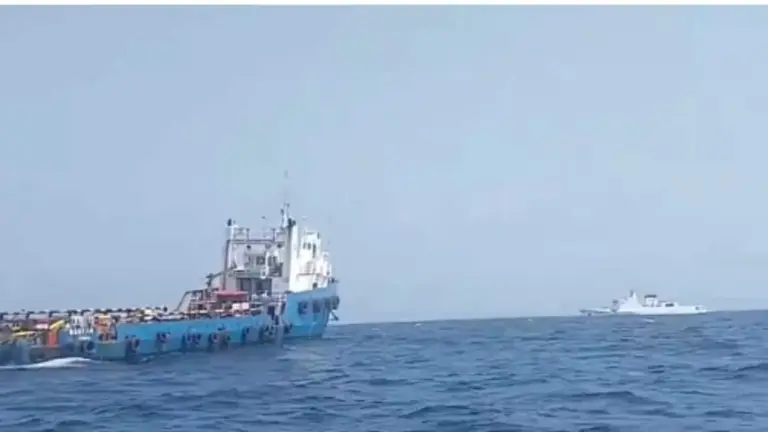











What does the recent attack on a Thai-flagged vessel in the Strait of Hormuz reveal about maritime security in the region? The incident underscores significant vulnerabilities, as Thailand confirmed three deaths from the attack, which has raised alarms about the safety of maritime routes critical to global trade.
On April 8, 2026, the Omani navy successfully rescued 20 crew members from the vessel following the assault. The attack not only resulted in loss of life but also highlighted the precarious situation in one of the world’s busiest shipping lanes. According to Sihasak Phuangketkeow, a representative from Thailand, “The three crewmen on the Thai-flagged vessel that was attacked in the Strait of Hormuz last month have died.” This tragic event has drawn attention to the ongoing threats faced by vessels operating in this area.
The backdrop to this incident is Thailand’s evolving geopolitical landscape. In April 2025, Thailand and India elevated their relationship to a ‘strategic partnership’, reflecting their deepening ties amid shared interests in regional stability and economic collaboration. This partnership is particularly significant as Thailand ranks second after India in semiconductor manufacturing among emerging economies, a sector that is becoming increasingly vital in the global economy.
Thailand’s semiconductor market is projected to mobilize more than 2.5 trillion baht (approximately US$81 billion) in investment by 2050, positioning the country as a key player in technology production. In comparison, India’s semiconductor market was estimated to be around US$50 billion for the fiscal year 2024-25. This burgeoning industry is crucial not only for economic growth but also for enhancing national security through technological advancement.
The historical context of Thailand’s maritime activities cannot be overlooked. The country shares its longest land border with Myanmar, which has implications for trade and security dynamics in the region. The longstanding cultural and commercial ties between India and Thailand, spanning over two millennia, further complicate the geopolitical landscape, as both nations navigate their interests in a rapidly changing environment.
As the situation develops, the implications of this maritime tragedy extend beyond immediate concerns for the families of the deceased crew members. It raises questions about the effectiveness of current maritime security measures and the potential for increased military presence in the region. The international community, particularly nations with vested interests in the Strait of Hormuz, will likely scrutinize the incident closely.
Looking ahead, the focus will be on how Thailand and its partners respond to this tragedy. Will there be a reevaluation of maritime security protocols? How will this incident affect Thailand’s strategic partnerships, particularly with India and other nations involved in semiconductor production? Details remain unconfirmed, but the need for enhanced security measures in vulnerable maritime zones is becoming increasingly clear.