








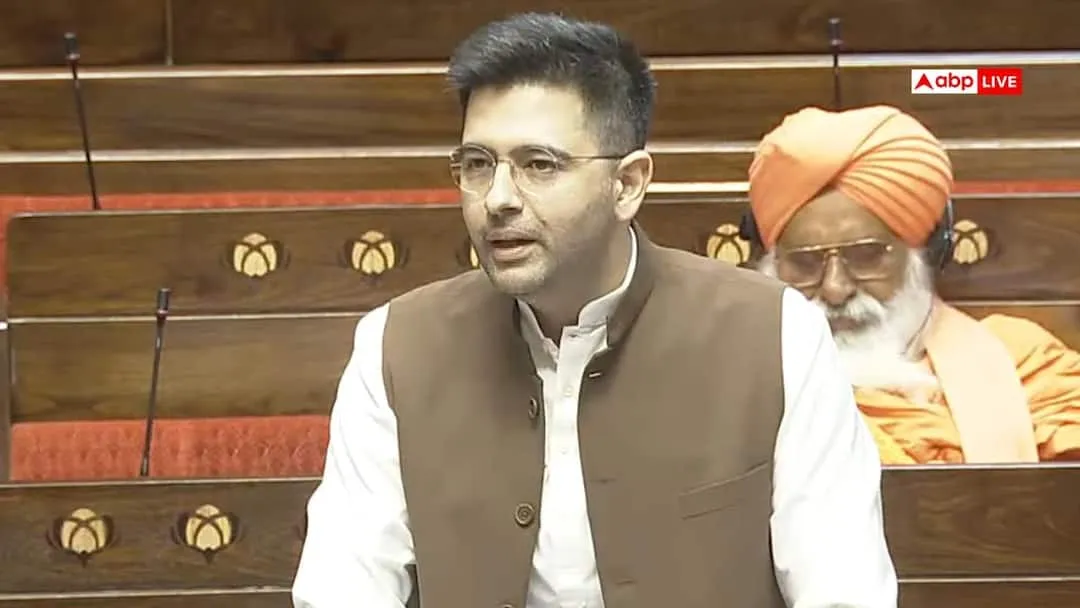
Raghav Chadha’s recent remarks in the Rajya Sabha come at a pivotal moment. On April 17, 2026, during the election of the new Deputy Chairman, Harivansh was elected unopposed. This marks his third term in this role, a significant achievement in Indian politics.
Chadha, a member of the Aam Aadmi Party (AAP), acknowledged Harivansh’s accomplishment with a congratulatory statement: “I congratulate Harivansh ji on his third term as Deputy Chairman.” This acknowledgment highlights the importance of camaraderie in political circles.
However, Chadha’s relationship with Harivansh is not entirely straightforward. He described it as “bittersweet,” indicating a mix of admiration and underlying tension. He stated, “My personal relationship with Harivansh ji has been a bit bittersweet.” Such sentiments reveal the complexities often present in political alliances.
In a bid to strengthen his position, Chadha requested additional speaking time after the bell rings. He argued that this would allow him and his colleagues to present their points more effectively: “If you could give us a couple of extra minutes after the bell rings, we could present our points more strongly.” This request underscores the competitive nature of parliamentary discussions.
Observers note that Chadha’s remarks may signal an attempt to foster a more cooperative atmosphere despite past grievances. His commitment to transform their “bittersweet relationship” into something sweeter reflects an understanding of the necessity for collaboration in governance.
The Punjab Government and various political entities are likely monitoring these developments closely. The dynamics within the Rajya Sabha can significantly influence legislative outcomes and party strategies.
As the political landscape evolves, officials suggest that further dialogue between parties could lead to more productive sessions in Parliament. The coming weeks will be critical for assessing how these relationships impact policy-making.
Details remain unconfirmed regarding any specific initiatives that may arise from this renewed focus on collaboration. However, the implications of such interactions are far-reaching for both AAP and broader political discourse in India.