










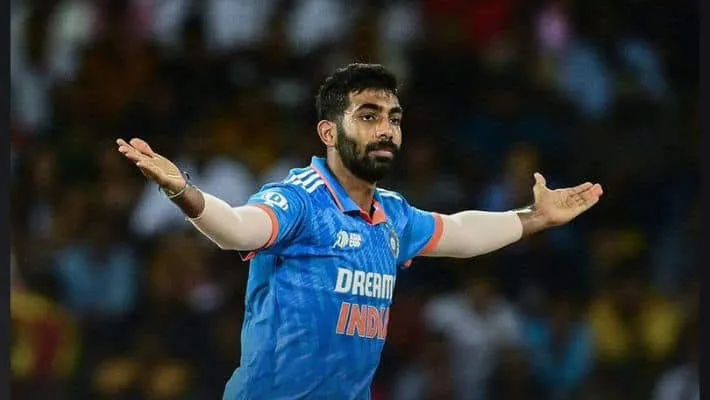
In a recent T20I match held in Dubai, Jasprit Bumrah conceded 45 runs in 4 overs, marking his third highest run concession in his T20I career. This performance raised eyebrows as it included 34 runs given away during the powerplay, the highest he has ever allowed in this phase of the game.
Despite Bumrah’s struggles, India continued its dominance over Pakistan, maintaining an unblemished 8-0 record in T20Is against their rivals. The match saw Abhishek Sharma shine, scoring the fastest fifty against Pakistan in just 24 balls, contributing significantly to India’s innings.
Sharma’s partnership with Shubman Gill was particularly noteworthy, as they amassed 105 runs for the opening wicket, showcasing a strong start for India. This partnership also set a new record for India’s highest powerplay score against Pakistan, reaching 69 runs without losing a wicket.
However, the match was not without its challenges for India, as they dropped 5 catches, the highest number since 2019. This lapse in fielding could have had significant implications for the outcome of the game.
In the context of historical performances, Gautam Gambhir’s 75 runs against Pakistan in the 2007 World Cup final remains a benchmark, while Abhishek Sharma’s recent 74 runs against Pakistan in 2025 further highlights the evolving talent within the Indian squad.
As the match concluded, the focus turned back to Bumrah, whose performance will likely be scrutinized in the coming days. His ability to bounce back from this outing will be critical for India’s future matches.
Overall, while Bumrah’s figures may raise concerns, India’s victory and record against Pakistan provide a silver lining. The team will need to address its fielding issues and ensure that key players like Bumrah return to form as they prepare for upcoming challenges.