








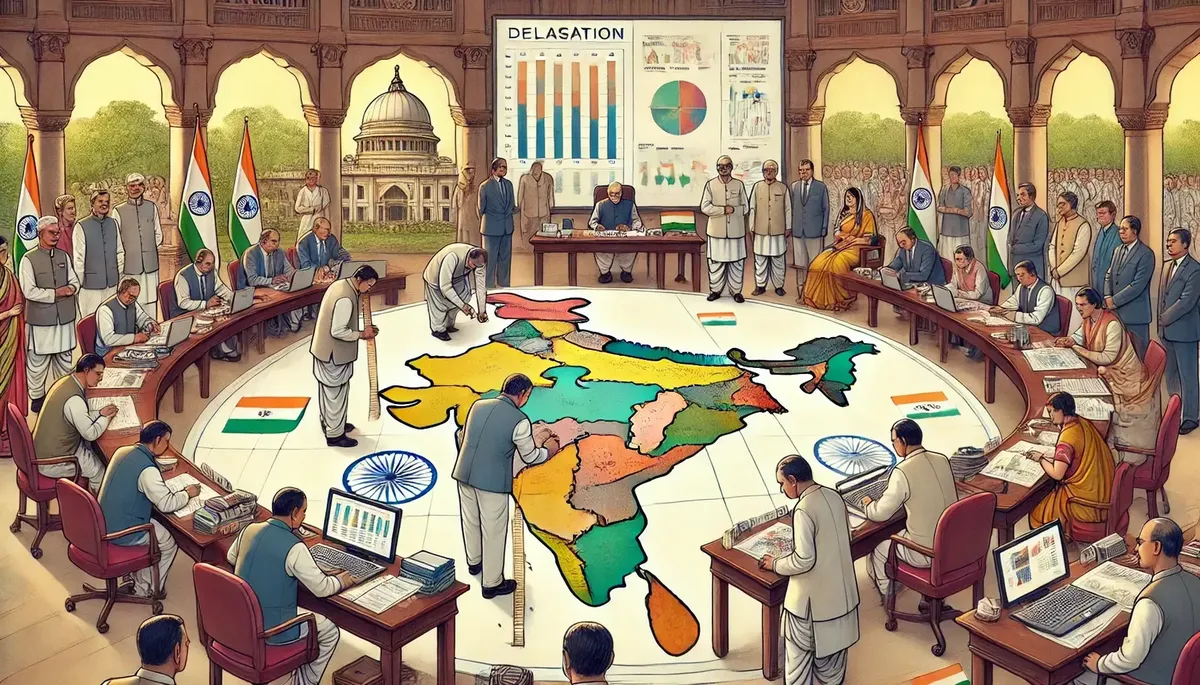
As the political landscape in India evolves, the Union Government has put forth a proposal that could dramatically alter the composition of the Lok Sabha. This proposal, which is set to be discussed in a Special Session of Parliament on April 16 and 17, 2026, aims to increase the total number of Lok Sabha seats from the current 543 to 850. This change is significant, as it seeks to amend the existing framework that has governed parliamentary representation for decades.
The proposed amendment to Article 82 of the Constitution is a pivotal aspect of this initiative. It seeks to eliminate the stipulation that delimitation must follow the post-2026 Census, thereby allowing the government to proceed with redrawing constituency boundaries ahead of the next census, which is expected to conclude in 2027. Currently, the Lok Sabha’s composition is based on the 1971 Census, and the boundaries of constituencies have been frozen since the 84th Amendment Act of 2001.
Under the new proposal, the Bill would empower the Central Government to establish a Delimitation Commission, which would be chaired by a former or current Judge of the Supreme Court. This Commission would play a crucial role in determining the new constituency boundaries and ensuring that the representation reflects the current demographic landscape of the country.
In addition to increasing the number of seats, the Bill also proposes an amendment to Article 81, allowing for a maximum of 815 members from the states and 35 from Union Territories. Furthermore, it includes a provision for a 33% reservation for women in both the Lok Sabha and State Assemblies, marking a significant step towards gender equality in political representation.
Notably, the Bill stipulates that the orders issued by the Delimitation Commission, once published in the Gazette of India, will have the force of law and cannot be challenged in any court. This provision underscores the government’s intent to streamline the delimitation process and minimize legal challenges that could arise from the reallocation of seats.
The implications of these changes are profound. By increasing the number of Lok Sabha seats and altering the basis for constituency delimitation, the government aims to enhance political representation for various demographic groups across the nation. The current allocation of seats has been criticized for being outdated, as it relies on population figures from the 1971 Census while the division of territorial constituencies is based on the 2001 Census.
As the Special Session approaches, the political ramifications of this proposal will be closely scrutinized. Stakeholders from various political parties and civil society organizations are likely to weigh in on the potential impacts of these changes on electoral dynamics and representation. The outcome of this deliberation could set a precedent for future electoral reforms in India.
In summary, the proposed delimitation process marks a significant shift in India’s approach to parliamentary representation, with the potential to reshape the Lok Sabha’s composition and enhance the representation of women in politics. As the discussions unfold, the focus will remain on how these changes will be implemented and their long-term effects on Indian democracy.