




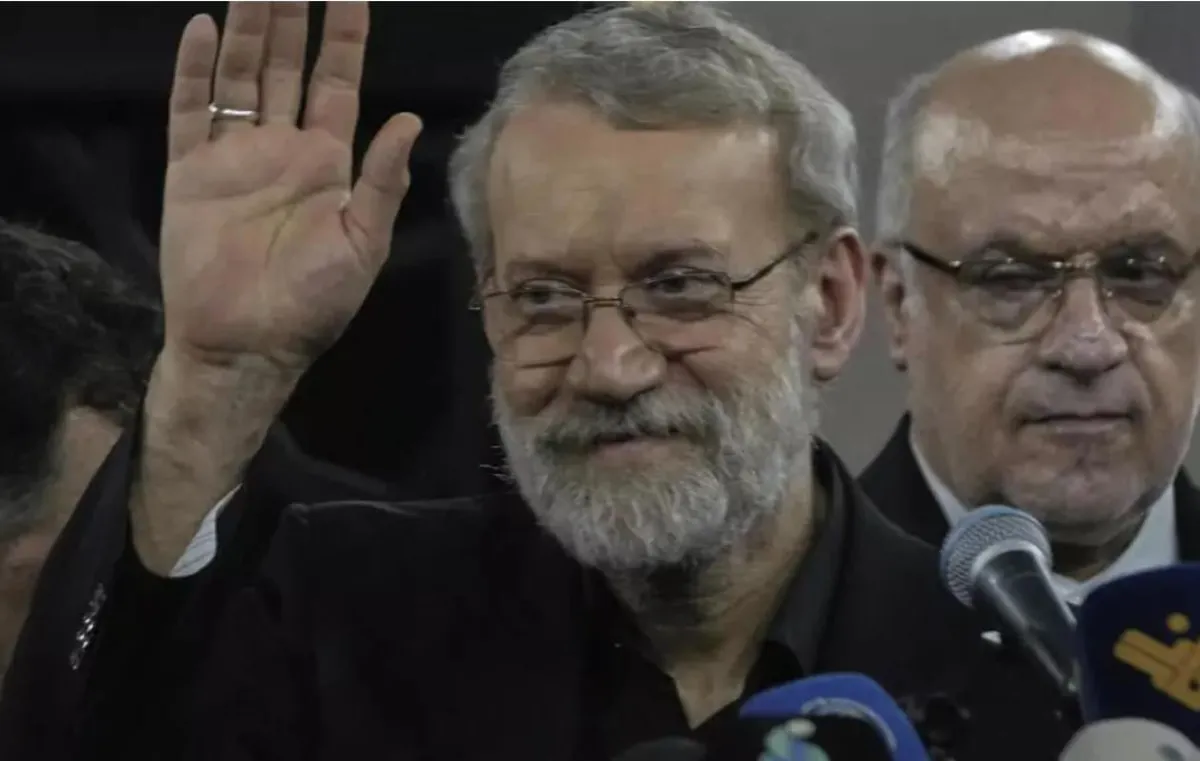
Ali Larijani, currently serving as the Secretary of the Supreme National Security Council of Iran, has held this position for the second time since August 2025. His extensive political career includes roles as a Minister, Speaker of Parliament, and multiple presidential candidacies, establishing him as a prominent figure in Iranian governance.
Larijani is often viewed as a pragmatic conservative by Western powers, a characterization that reflects his approach to international negotiations. He has been involved in discussions with Western nations, aiming to navigate Iran’s complex geopolitical landscape.
However, his political weight is under scrutiny. Observers like Azadeh Kian express skepticism regarding the actual influence of Larijani’s orders, particularly concerning the Revolutionary Guards, who operate as a “state within a state.” Kian states, “It is not obvious that his orders will actually be followed, particularly by the Revolutionary Guards.” This raises questions about the effectiveness of Larijani’s leadership.
Mahnaz Shirali, a political scientist specializing in Iran, offers a stark perspective, claiming that Larijani is “hated by Iranians and is a criminal against humanity.” Such sentiments highlight the challenges Larijani faces in garnering public support amidst a backdrop of political dissent.
Despite these challenges, Larijani’s role remains crucial in the current political climate. His ability to negotiate may only extend to facilitating a departure from the regime rather than embodying the future of Iranian power. Shirali notes, “Even if the two men were to reach some kind of compromise, they could not possibly establish an authority based on Ali Larijani.” This suggests a significant limitation on his potential influence.
The dynamics of Larijani’s position are further complicated by the potential threats he faces. Kian warns, “If the Americans or the Israelis wanted to eliminate him, he would be eliminated like the others,” underscoring the precarious nature of his standing in Iranian politics.
As Larijani continues to navigate this complex landscape, observers remain watchful of how his role will evolve and whether he can assert any meaningful authority. Details remain unconfirmed regarding the future trajectory of his political influence and the response from the Revolutionary Guards.