








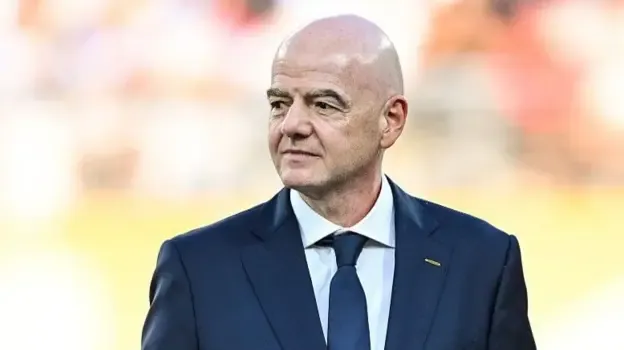
The Norwegian Football Federation (NFF) has called for the resignation of FIFA president Gianni Infantino following his attempt to sell stakes in the World Cup to private investors. This move by Norway goes further than other football associations, including England, Wales, Croatia, and Albania, which have withdrawn their support for Infantino without explicitly demanding his resignation.
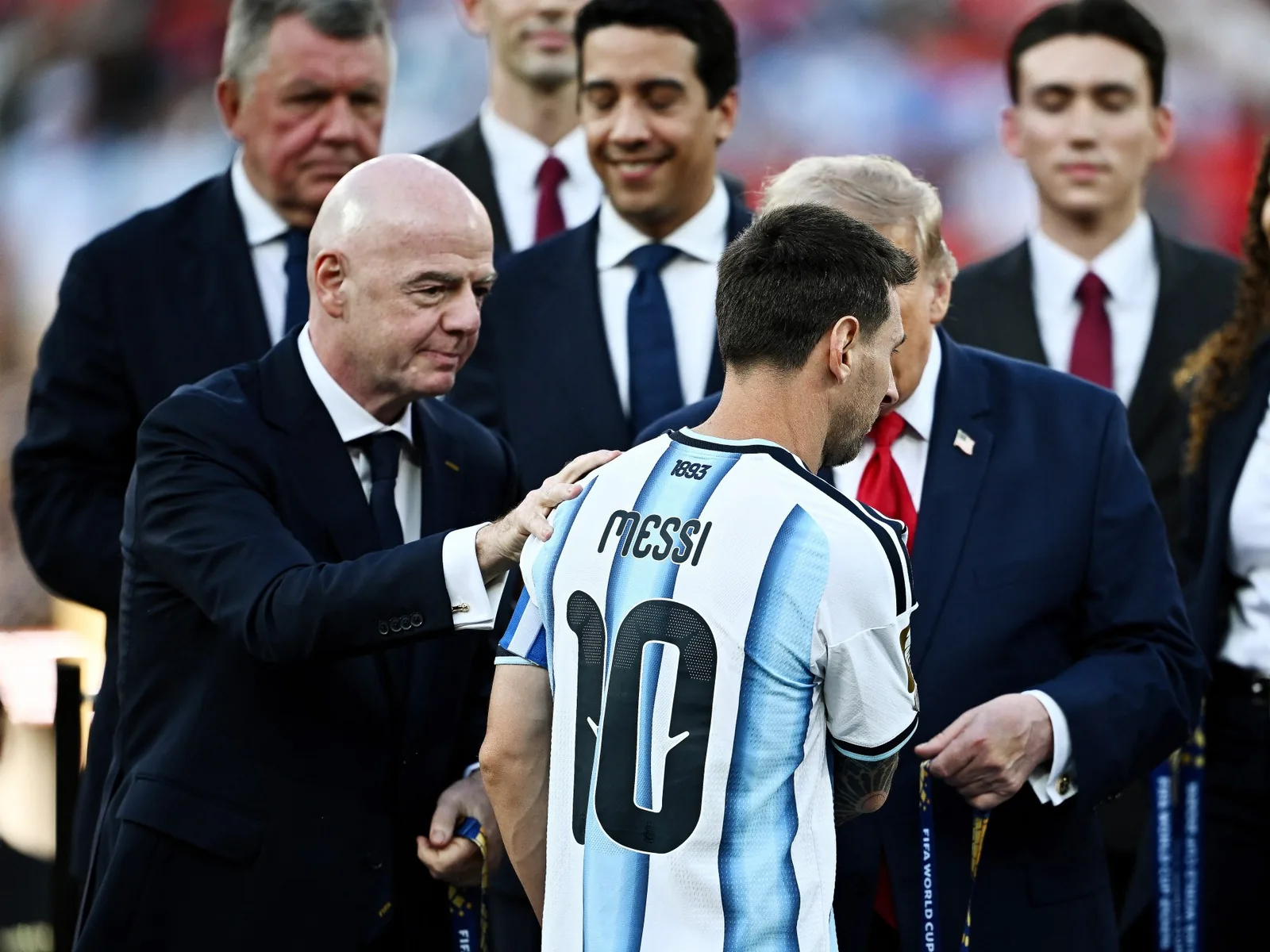
Lise Klaveness, president of the NFF, stated that Infantino lacks the institutional trust necessary to govern FIFA effectively. She emphasised that international football cooperation is facing significant challenges and that a change in leadership is required. Klaveness also mentioned that the NFF has raised concerns about the awarding of tournaments, the inaugural FIFA peace prize, and the overturning of a ban for American forward Folarin Balogun during the recent World Cup.
Divisions Over Leadership
While Norway and several European nations have expressed strong opposition, Infantino has received backing from other regions. The Mexican Football Federation (FMF), a co-host of the 2026 World Cup, has publicly supported Infantino’s leadership, breaking ranks with its regional governing body, Concacaf. Concacaf had previously called for a “comprehensive reckoning” of Infantino’s presidency after the aborted private investment plans.
The FMF’s statement affirmed its support for Infantino’s leadership in promoting football development through institutional strengthening. This sentiment was echoed by Conmebol, South America’s governing body, which stated it would reject any attempt to remove Infantino without a vote involving all 211 FIFA members. However, Conmebol also expressed concern about “repeated unilateral actions taken without resorting to dialogue.”
The football association of 2026 World Cup runners-up Argentina also praised Infantino, acknowledging his recognition and apology for “errors.” Argentina’s association described his decade-long tenure as FIFA president as being “centred on the development of soccer worldwide and institutional strength based on a clear, stable, and transparent governance model.”
The Confederation of African Football (CAF) has unanimously backed Infantino, further highlighting the growing divide within global football. This support from Africa, with its 54 members, is significant for Infantino, especially in countering opposition from Uefa, which has 55 members.
Challenges to Re-election
Infantino’s proposal to sell stakes in the World Cup to private investors, known as the FIFA Forward Enterprise (FFE), was described by Uefa as a “shabby, back room, opaque deal.” Uefa has stated it has lost confidence in Infantino and that its conditions have not been met, despite the plan being aborted. European teams could still boycott the World Cup if the situation is not resolved.
Ordinarily, Infantino would not be eligible to stand for re-election in March, as FIFA statutes limit a president to three four-year terms. However, he successfully argued that his first term, which lasted only three years after replacing Sepp Blatter in 2016, should not count. This interpretation allows him to seek a fourth term.
Infantino was re-elected unopposed in 2019 and 2023. The deadline for candidates to be put forward for the upcoming election, along with at least five letters of support from member associations, is 18 November. The election will be conducted by secret ballot at the 77th FIFA Congress in Rabat, Morocco, on 18 March.
To win the election, a simple majority of the 211 member associations is required if there are two candidates. If there are three or more candidates, 75% of votes are needed for an outright win. If this threshold is not met, the candidate with the fewest votes is eliminated, and another vote is held until only two candidates remain.
Infantino’s strategy to secure support has historically involved extensive travel and engagement with member associations. He has also leveraged FIFA’s funding programmes, such as FIFA Forward 3.0, which provides national associations with significant financial support. The latest iteration of this programme allocated up to $8m to each national association in its four-year cycle, representing a 30% increase from the previous cycle. The upcoming FIFA Forward 4.0 may further increase this funding, which is a key factor in maintaining loyalty, particularly among developing nations.
The Asian Football Confederation (AFC) initially stood in solidarity with Uefa and Concacaf in opposing the FFE plans, with its president branding FIFA’s lack of consultation as “totally unacceptable.” However, the AFC has since welcomed the withdrawal of Infantino’s proposal. Several Asian nations, including Indonesia, Qatar, Kuwait, Sri Lanka, and the Philippines, have expressed support for Infantino.
Players’ union FIFPRO described Infantino’s proposal as not only a governance failure but also a “profound abuse of presidential power.” FIFA, in response, stated that all actions related to the commercial rights proposal complied with its regulations, attributing any issues to process and communication rather than governance breaches. The election for the FIFA presidency is scheduled for 18 March in Rabat, Morocco.
Source: bbc.com