










Prior Expectations for TCS
Before the recent downturn, Tata Consultancy Services (TCS) was viewed as a stalwart in the technology sector, consistently delivering strong financial results and maintaining a robust market presence. With a market capitalization of Rs.8,91,913 crores, TCS was the largest company in the Computers – Software & Consulting sector. Investors had high expectations, buoyed by the company’s impressive average Return on Equity (ROE) of 43.49% and a solid dividend yield of 4.42%. The stock was perceived as a reliable investment, supported by its zero debt-to-equity ratio, which suggested financial stability.
Decisive Moment and Immediate Changes
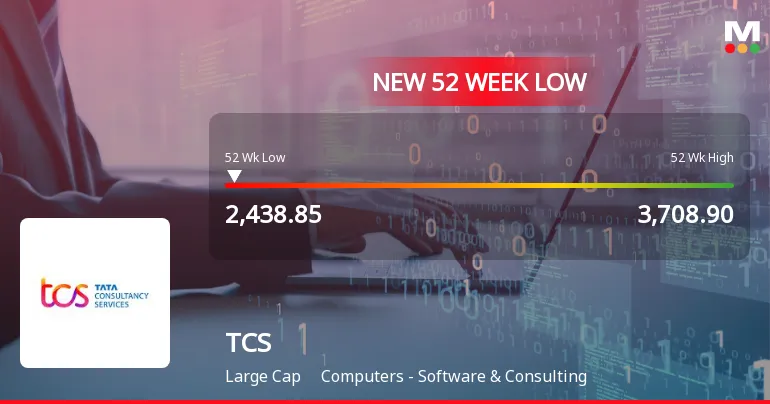
However, on March 12, 2026, TCS’s share price plummeted to Rs.2440, marking its lowest level in the past year. This decline was part of a broader trend, as the stock had lost 7.79% in value over a continuous nine-day period. The situation was exacerbated by the overall market performance, with the Sensex closing down by 269.05 points at 76,100.60, a decline of 0.99%. Such a significant drop in TCS’s stock price raised concerns among investors and analysts alike, indicating a bearish trend as the stock traded below all key moving averages.
Direct Effects on Stakeholders
The immediate effects of this decline have been felt across various stakeholders. Institutional investors, who hold 23.25% of TCS’s shares, are likely reassessing their positions in light of the stock’s performance. The decline in stock value also impacts retail investors, many of whom may be facing losses. Furthermore, the company’s quarterly earnings per share (EPS) have dropped to Rs.29.44, reflecting the challenges TCS is currently facing in maintaining profitability amidst a volatile market environment.
Expert Perspectives on the Shift
Market analysts have pointed to several factors contributing to TCS’s stock decline. The company’s stock has generated a return of -30.08% over the past year, which raises questions about its future performance. Experts suggest that while TCS has historically been a strong performer, the current market conditions and the recent downturn may require a reevaluation of its growth strategies. The bearish trend could lead to increased scrutiny of TCS’s operational efficiency and its ability to adapt to changing market dynamics.
Conclusion and Future Outlook
As TCS navigates this challenging period, the focus will likely shift to how the company can leverage its strengths, such as its strong ROE and zero debt-to-equity ratio, to recover from this downturn. Investors and analysts will be closely monitoring upcoming financial reports and market conditions to gauge whether TCS can regain its footing in the competitive technology landscape. Details remain unconfirmed regarding any strategic changes the company may implement in response to this decline.