







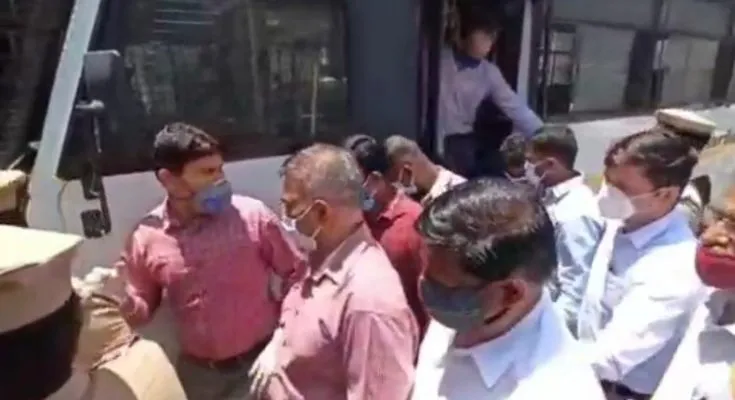
The Sathankulam case, which has garnered national attention, revolved around the custodial deaths of Jayaraj and Bennix in June 2020. Prior to the recent judgement, there was widespread skepticism regarding police accountability in India, particularly concerning cases of custodial violence. The expectation was that the legal process might be prolonged, potentially delaying justice for the victims’ families.
However, a decisive moment occurred on March 23, 2026, when the First Additional District and Sessions Court in Madurai found all nine police officers involved guilty. This verdict marks a significant shift in the narrative surrounding police brutality, particularly as it comes nearly six years after the incident. The court concluded that the deaths were a result of murder, rejecting the defense’s claims that the injuries were self-inflicted.
The immediate effects of this ruling are profound. The guilty verdict against the officers, including Inspector S. Sridhar and Sub-Inspectors P. Raghu Ganesh and K. Balakrishnan, has reignited discussions on police reform and accountability in India. The sentencing for these officers is scheduled for March 30, 2026, which will further determine the consequences of their actions.
Jayaraj and Bennix were subjected to severe torture after being taken into custody for allegedly violating COVID-19 norms. Jayaraj was arrested on June 19, 2020, and both men endured violence throughout the night, leading to their deaths just days apart—Bennix on June 22 and Jayaraj on June 23.
The case has drawn attention not only for its tragic circumstances but also for the extensive legal process that followed. Over 100 witnesses were examined during the trial, underscoring the complexity and gravity of the situation. The Madurai bench of the Madras High Court initially took suo motu cognizance of the case, directing a judicial inquiry that ultimately led to the transfer of the investigation to the Central Bureau of Investigation.
Judge G Muthukumaran stated, “The injuries inflicted on Jayaraj and Bennix were unnatural, which ultimately caused their death,” emphasizing the court’s stance on the brutality of the actions taken by the police. This verdict is a critical moment in the ongoing fight against custodial violence in India.
As the nation awaits the sentencing, the High Court’s assertion that “justice delayed is justice denied and justice hurried is justice buried” resonates deeply, reflecting the urgency for accountability in law enforcement. The outcome of this case may set a precedent for future cases involving police misconduct.
Overall, the Sathankulam case judgement represents a pivotal moment in the discourse surrounding police accountability in India, with the potential for significant implications for law enforcement practices moving forward.