










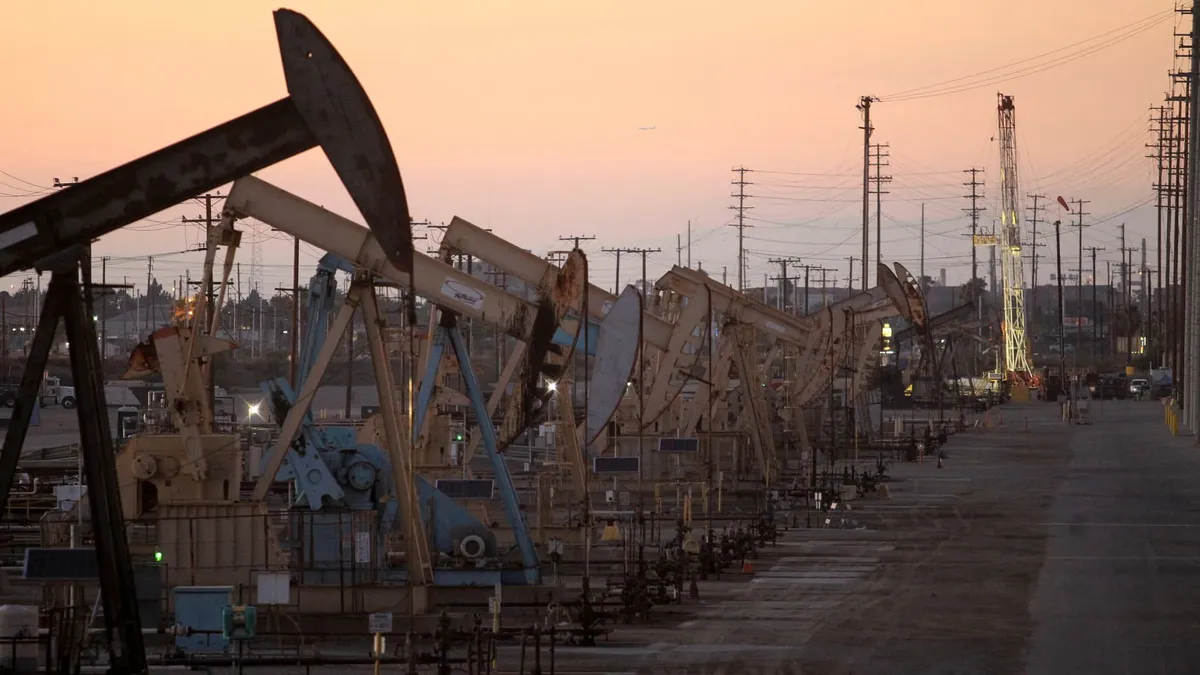
Impact of Recent Developments on Oil Prices
Oil prices have seen a significant drop today, with Brent crude futures falling by $6.51, or 6.6%, to $92.45 a barrel. Similarly, US West Texas Intermediate (WTI) crude dropped $6.12, or 6.5%, to $88.65. This decline follows a dramatic increase earlier in the week, where oil prices jumped almost 30% on Monday, crossing the $100-a-barrel mark.
Causes of the Price Fluctuations
The recent volatility in oil prices can be attributed to a combination of geopolitical tensions and production adjustments by major oil-producing countries. Notably, Iraq has slashed output at its key southern oilfields by 70%, bringing production down to 1.3 million barrels per day. Kuwait Petroleum Corporation has also begun reducing output and declared force majeure, while Saudi Arabia has started trimming its production as well.
Geopolitical Context and Market Reactions
The ongoing conflict in the Middle East has raised fears about potential supply disruptions. Iran’s Revolutionary Guards have warned that they would not allow ‘one litre of oil’ to be exported from the region if US and Israeli strikes continue. In response to the rising oil prices, G7 countries have stated their readiness to take necessary measures to address the surging global oil prices. Furthermore, former President Donald Trump suggested that the Middle East war may end soon, which could alleviate concerns about prolonged supply disruptions.
Market Sentiment and Future Outlook
Market analysts have noted that the recent fluctuations in oil prices reflect a complex interplay of supply and demand dynamics, heavily influenced by geopolitical developments. Apurva Sheth commented on the market’s reaction, stating, “The Trump always chickens out (TACO) trade is back after crude oil jumped more than 50% in two sessions after escalations in the war.” This indicates a significant market sensitivity to political developments in the region.
Potential for Further Price Changes
Looking ahead, the uncertainty surrounding oil prices remains palpable. Analysts warn that if the conflict continues for an extended period and oil shipments through the Strait of Hormuz are disrupted, prices could rise again. Maulik Patel noted, “If the conflict continues for a longer time and oil shipments through the Strait of Hormuz get disrupted, prices could rise again.” This highlights the precarious nature of the current oil market.
Conclusion and Uncertainties
As the situation evolves, the exact impact of diplomatic movements on oil prices remains unclear. Future oil price trends will depend heavily on geopolitical developments and supply decisions made by key oil-producing nations. Details remain unconfirmed, and market participants are advised to stay vigilant as new information emerges.