









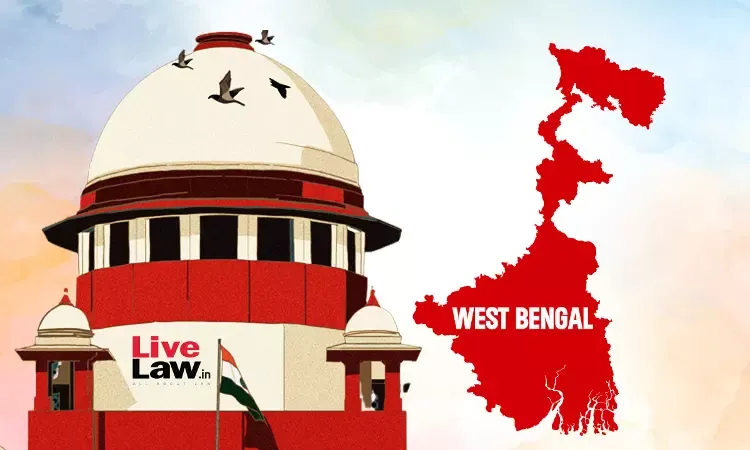
The Supreme Court has sharply criticized the West Bengal Government for its delays in the Orange Line Metro project in Kolkata, underscoring significant concerns regarding public infrastructure development in the region.
The Orange Line Metro project, designed to connect New Garia to Salt Lake Sector V, has faced numerous setbacks, prompting the Supreme Court to label the state’s approach as ‘obstinate’. This criticism highlights the urgent need for efficient management of public transport initiatives in Kolkata.
In a related development, the Energy and Resources Institute (TERI) conducted a comprehensive study titled ‘Accelerating Net Zero Transition of Public Transportation in Kolkata’. This study is pivotal as it identifies optimal locations for electric vehicle (EV) charging stations throughout the city.
Furthermore, the TERI study assesses the energy and infrastructure requirements necessary to support the growing demand for electric vehicles in Kolkata. It presents a detailed decarbonization roadmap for the city’s public transport system extending to 2050.
This roadmap outlines strategic measures aimed at reducing emissions and integrating renewable energy sources into Kolkata’s public transportation framework. The findings are crucial as they align with global efforts to transition towards sustainable urban mobility.
The Supreme Court’s intervention signals ongoing challenges with public infrastructure projects in West Bengal, raising questions about the state’s commitment to timely execution and modernization of essential services.
As the situation develops, stakeholders are closely monitoring the government’s response to the Supreme Court’s remarks and the implementation of the recommendations from the TERI study.
Details remain unconfirmed regarding the timeline for the Orange Line Metro project and the potential impact of the TERI study’s recommendations on future infrastructure planning in Kolkata.