










What the data shows
The Indian Railway Catering & Tourism Corporation (IRCTC) has recently raised questions regarding its market performance and service quality. The central question is: How is IRCTC managing its share price amidst operational challenges and new service launches? The answer lies in a mix of financial data and operational decisions.
As of the previous week, IRCTC’s share price closed with a loss of -0.92%. The immediate support level for the share price is identified at ₹512.77, while immediate resistance stands at ₹538.42. Analysts indicate that if the share price falls below ₹512.77, a sharp breakdown could occur, with major support for the week at ₹502.68. The trading range for IRCTC’s share price is projected between ₹487.12 and ₹564.07.
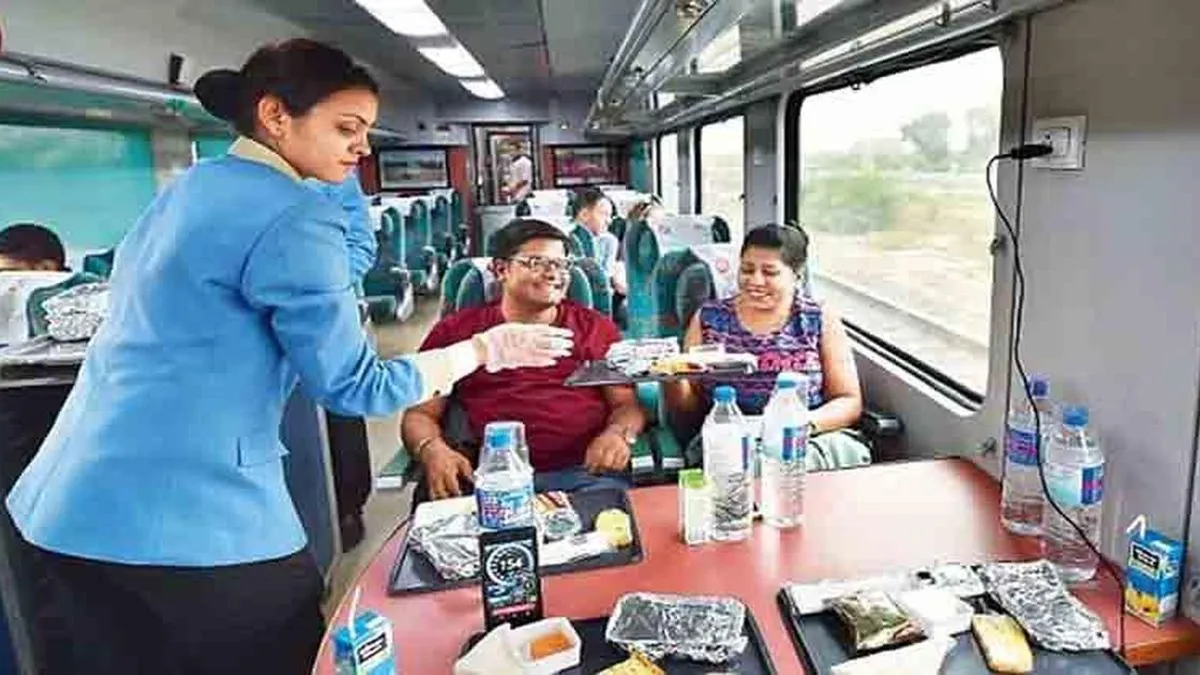
In addition to the financial metrics, IRCTC has been actively managing its catering services. Recently, the corporation penalized a caterer ₹5,000 for failing to serve morning tea on the Duronto Express, a service that is expected to maintain high standards for passenger satisfaction. This incident highlights the ongoing challenges IRCTC faces in ensuring quality service across its operations.
Looking ahead, IRCTC is set to launch the Bharat Gaurav Train, which will operate from April 11 to April 22, 2026. This train aims to cover multiple holy sites in South India, catering to the growing demand for religious tourism. The Economy Class ticket price for this service is set at ₹24,790 per person, while Standard Class tickets will cost ₹42,530 and Comfort Class tickets will be priced at ₹56,710 per person. Bookings for the Bharat Gaurav Train will be available on a first-come, first-served basis, indicating a potential surge in demand.
IRCTC’s decision to introduce the Bharat Gaurav Train aligns with its strategy to enhance tourism and travel options across India. The train will connect significant religious sites, including the Tirupati Balaji Temple, Ramanathaswamy Temple, Meenakshi Temple, Kanyakumari, and Mallikarjuna Jyotirlinga, thereby attracting a diverse range of passengers.
Despite these positive developments, uncertainties remain regarding the overall impact of these initiatives on IRCTC’s share price and operational efficiency. Details remain unconfirmed about how the new train services will affect the company’s financial health in the long term, especially in light of recent share price fluctuations.
As IRCTC navigates these challenges and opportunities, stakeholders will be closely monitoring the company’s performance in the coming weeks. The interplay between service quality, pricing strategies, and market conditions will be crucial in determining IRCTC’s trajectory in the competitive landscape of Indian railways.