









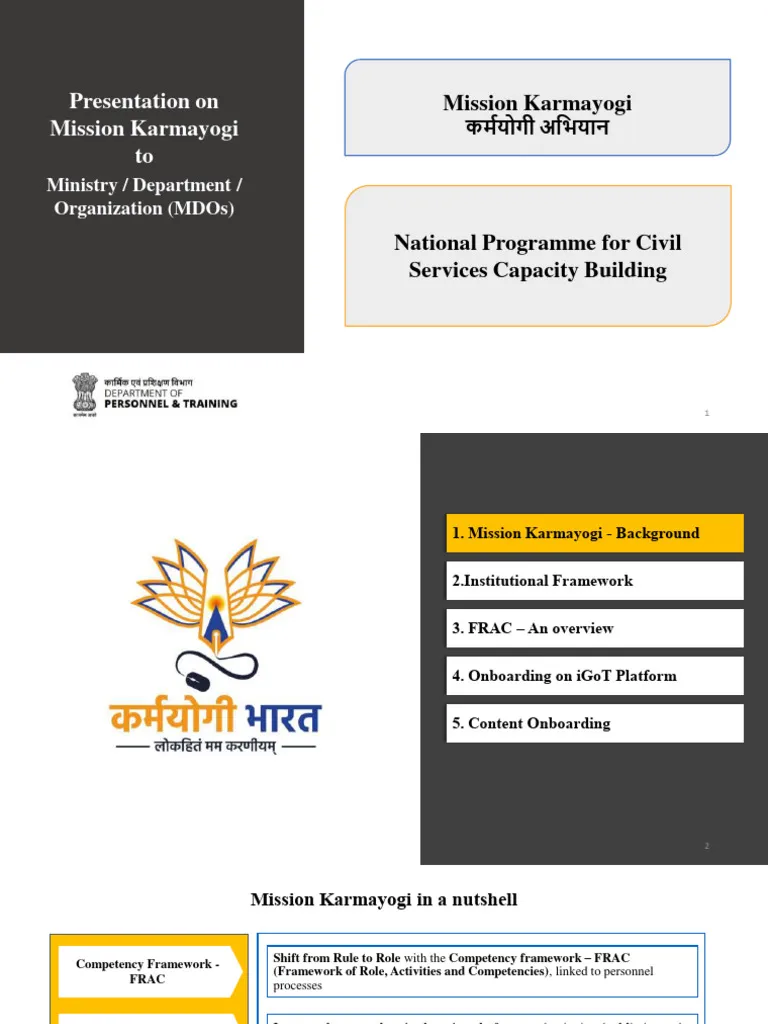
Before the launch of the iGOT Karmayogi initiative, civil service training in India was often criticized for its lack of modernity and engagement. The Mission Karmayogi, which began in 2020, aimed to enhance the capacity, performance, and efficiency of civil servants, but the approach remained traditional and less interactive.
On April 2, 2026, a decisive moment arrived with the commencement of the Sadhna Saptah, a week-long event organized by the Department of Personnel and Training, the Capacity Building Commission, and Karmayogi Bharat. This initiative introduced a structured and engaging training format, emphasizing the importance of digital learning through the iGOT Karmayogi platform.
The Sadhna Saptah, running from April 2 to April 8, 2026, aims to strengthen the culture of capacity building among civil servants. Participants are required to log into the iGOT Karmayogi Bharat portal and complete at least four hours of prescribed courses, marking a shift towards a more interactive and self-directed learning environment.
Dr. Alka Mittal highlighted the significance of this initiative, stating, “Mission Karmayogi aims to build the capacity, performance, and efficiency of civil servants across the country.” This reflects a broader commitment to modernizing the training framework for public servants.
The immediate effects of the Sadhna Saptah are expected to enhance the skills of civil servants significantly. The training program comprises four thematic modules that address the roles and responsibilities of a Rashtriya Karmayogi, ensuring that officials are better equipped to serve the public.
Vikas Kulkarni emphasized the importance of engagement, stating, “Officers and staff have been advised to log in to the iGOT Karmayogi Bharat portal and complete at least four hours of prescribed courses.” This requirement is designed to foster a habit of continuous learning among civil servants.
Experts believe that this shift towards a digital learning platform will not only improve individual performance but also enhance overall governance in India. The integration of technology into civil service training is seen as a necessary evolution in response to the demands of modern governance.
As the Sadhna Saptah unfolds, it is anticipated that the outcomes will set a new standard for civil service training in India, paving the way for a more competent and responsive public service.
Details remain unconfirmed regarding the long-term impact of this initiative, but the initial response from participants and stakeholders has been overwhelmingly positive.