









Political Expectations Before the Shift
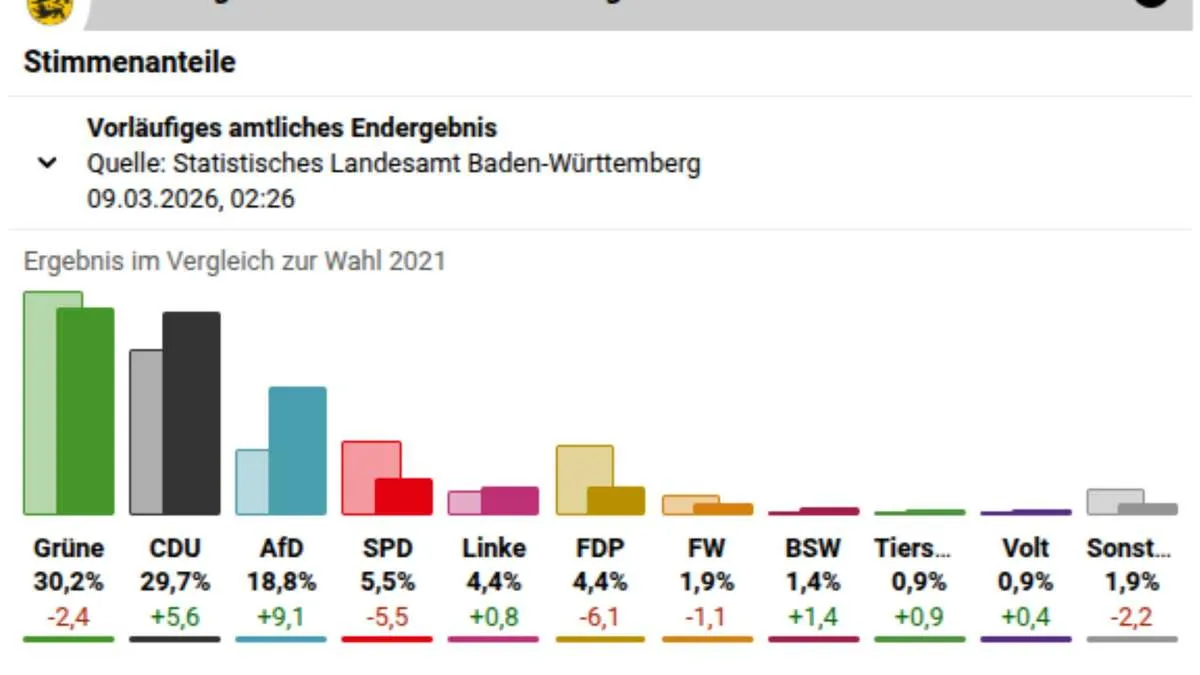
Before the recent developments surrounding Markus Frohnmaier and the Alternative for Germany (AfD), the political landscape in Baden-Württemberg was characterized by a fragmented parliament. The AfD, having received only 9.7% of the votes in the 2021 state election, was the smallest faction in the regional parliament. This positioned the party as a minor player in a political arena dominated by other parties, particularly the Greens and the CDU. Frohnmaier, a Bundestag member and a close associate of AfD leader Alice Weidel, was seen as a controversial figure due to his connections to right-wing factions and his contentious background.
Decisive Changes in the Political Scene
The recent state election marked a turning point for the AfD, with the party achieving 18.8% of the votes, a significant increase of 9.1% from the previous election. This surge in support reflects a growing acceptance of the party’s platform among the electorate. However, Frohnmaier’s role has been complicated; despite being a prominent figure within the party, he was labeled a ‘fake candidate’ as he was not on the ballot for the election. This contradiction raises questions about his influence and the strategic decisions made by the AfD.
Immediate Effects on Political Dynamics
The increase in the AfD’s electoral support has direct implications for the political dynamics in Baden-Württemberg. Frohnmaier’s offer of collaboration to CDU candidate Manuel Hagel during the campaign indicates a potential shift towards more strategic alliances, despite Hagel’s firm stance against accepting support from the AfD. He stated, “Für mich ist kein Amt der Welt so wichtig, dass ich mich mit Stimmen der AfD dort hineinwählen lasse,” emphasizing his reluctance to engage with the party. This tension highlights the challenges the AfD faces in gaining broader acceptance within the established political framework.
Expert Perspectives on the Shift
Political analysts have noted that the AfD’s rise could lead to significant changes in governance and policy-making in the region. Alice Weidel remarked, “Das läuft auf eine Verdopplung unseres Ergebnisses hinaus, und damit können wir sehr zufrieden sein,” indicating a sense of optimism within the party regarding their electoral performance. However, this optimism is met with caution from other political figures. Cem Özdemir articulated a clear opposition to the AfD’s influence, stating, “Was die AfD angeht, ist für mich völlig klar: Der Auftrag des Regierens ist, alles dafür zu tun, dass die AfD beim nächsten Mal schwächer ist.” This sentiment reflects a broader concern among mainstream parties regarding the normalization of the AfD’s presence in regional politics.
Frohnmaier’s Background and Controversies
Frohnmaier’s background adds another layer of complexity to his political role. Born in Romania and adopted by a German couple, his personal history intersects with the party’s controversial stances on immigration and national identity. His connections to Russia and involvement in the right-wing faction of the AfD have further fueled debates about his credibility and the party’s overall agenda. As the AfD continues to navigate its identity and public perception, Frohnmaier’s position may evolve in response to both internal and external pressures.
Looking Ahead
As Baden-Württemberg’s political landscape continues to shift, the implications of the AfD’s electoral success and Frohnmaier’s role will be closely monitored. With 7.7 million eligible voters in the region, the potential for further changes in voter sentiment remains significant. The AfD’s strategy moving forward will likely focus on consolidating its gains while addressing the challenges posed by mainstream parties. Details remain unconfirmed regarding how these dynamics will unfold in future elections, but the current trajectory suggests a more prominent role for the AfD in regional politics.