







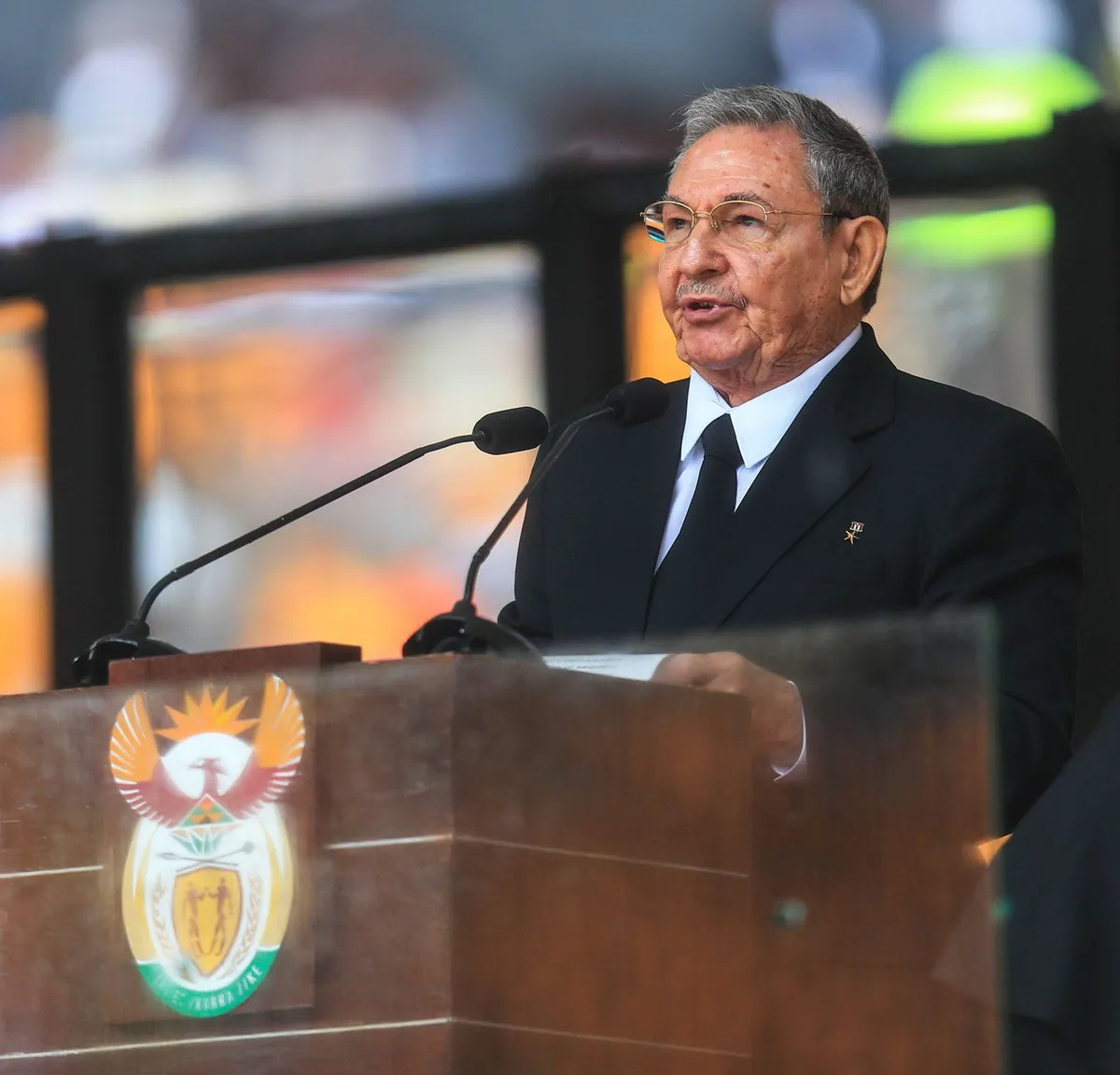
The legacy of Fidel Castro looms large over Cuba, with significant ramifications for the nation’s political and economic landscape. Following his retirement, Raúl Castro took the reins of leadership, marking a pivotal transition in the country’s governance. Under Raúl Castro, who served as head of state from 2008 to 2018, Cuba faced numerous challenges, including a severe economic downturn and humanitarian crises exacerbated by international sanctions.
Raúl Castro, born on June 3, 1931, in Holguín province, played a crucial role in the 26th of July Movement, which brought Fidel Castro to power in 1959. His presidency was characterized by attempts to reform the economy, including the removal of wage restraints and the allowance of private enterprise. However, these measures were insufficient to counteract the economic decline that saw an 11 percent drop in GDP in 2020, a year marked by the COVID-19 pandemic and intensified U.S. sanctions.
During Raúl Castro’s presidency, approximately 500,000 government employees were laid off as part of economic reforms aimed at stabilizing the faltering economy. Despite these efforts, Cuba has faced significant challenges, including nationwide blackouts attributed to an oil blockade imposed by the Trump administration. The United Nations has warned of a humanitarian crisis in Cuba due to prolonged power outages and economic issues, emphasizing the dire need for approximately $94 million to address the energy crisis and hurricane damage.
Raúl Castro’s leadership also saw a historic thaw in relations with the United States, particularly during talks with Barack Obama in 2014, which led to the reopening of embassies and a re-establishment of diplomatic relations. However, this progress faced setbacks with the subsequent Trump administration, which reinstated many sanctions and heightened tensions. Raúl Castro’s retirement from the Communist Party in April 2021 marked the end of an era, leaving the future of Cuba’s political landscape uncertain.
Reaction from the field
Current President Miguel Díaz-Canel has emphasized the need for dialogue and cooperation, stating, “First, we must build a channel for dialogue. Then, we must build common agendas of interests for the parties.” This approach reflects an acknowledgment of the challenges facing Cuba, particularly in light of the health crisis exacerbated by economic difficulties. Tedros Adhanom Ghebreyesus, Director-General of the World Health Organization, has expressed deep concern over the health situation in Cuba, noting that the delivery of health services is in peril.
As Cuba navigates the complexities of its post-Castro era, approximately 70 percent of the population was born after the triumph of the revolution, indicating a generational shift in perspectives and expectations. The new leadership under Díaz-Canel faces the daunting task of addressing the economic and social issues that have persisted for decades, while also managing the legacy of Fidel Castro and Raúl Castro.
Details remain unconfirmed regarding the long-term strategies that will be implemented to revitalize Cuba’s economy and improve living conditions for its citizens. The international community watches closely as Cuba grapples with its historical challenges and seeks to forge a path forward in a rapidly changing world.