










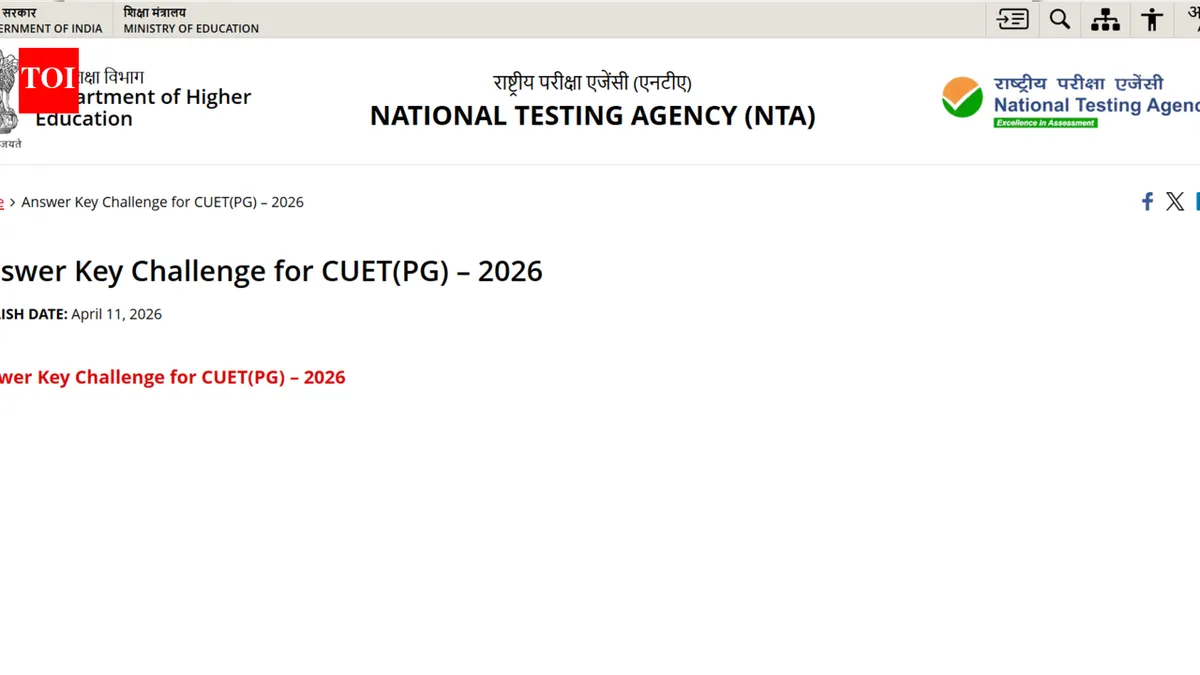
The release of the CUET PG 2026 answer key marks a significant milestone for candidates preparing for postgraduate admissions in India. This pivotal event not only provides clarity on the examination results but also sets the stage for subsequent admissions at institutions like Jawaharlal Nehru University (JNU), which will commence its PG admissions for the 2026-27 academic year following the declaration of CUET PG results.
Candidates have a limited window to challenge any discrepancies in the answer key, with the objection period set from April 11 to April 14, 2026. An objection fee of ₹200 per question is required, which is non-refundable. This process allows candidates to ensure the accuracy of their scores, as the final answer key released after this review will be binding.
Understanding the safe scores is crucial for candidates as they prepare for the next steps in their academic journey. The safe score range for the General category is estimated between 210 and 230, while for the OBC category, it is between 200 and 220. Candidates from the SC category should aim for a safe score of 180 to 200, and those from the ST category should target a range of 160 to 180. These figures are essential for students to gauge their standing in the competitive admission landscape.
It is important to note that candidates must have appeared for the CUET PG 2026 to be eligible for JNU admissions. This requirement emphasizes the significance of the CUET PG examination as a gateway to higher education opportunities in prestigious institutions across India.
Additionally, admissions to specific programs, such as the MSc in Biotechnology, will be based on the Graduate Aptitude Test – Biotechnology (GAT-B) score, further diversifying the criteria for postgraduate admissions. This highlights the multifaceted nature of the admission process, which varies across different programs and institutions.
As the examination and admission processes unfold, candidates are advised to stay informed about any updates regarding the CUET PG 2026 results and subsequent admissions. The landscape of higher education in India continues to evolve, and the outcomes of these examinations will play a crucial role in shaping the academic futures of many students.
Details remain unconfirmed regarding the exact timeline for the announcement of results and the subsequent admission processes at various universities. However, the release of the answer key and the objection window is a clear indicator that the admissions cycle is in motion, and candidates must remain vigilant and proactive in their preparations.