









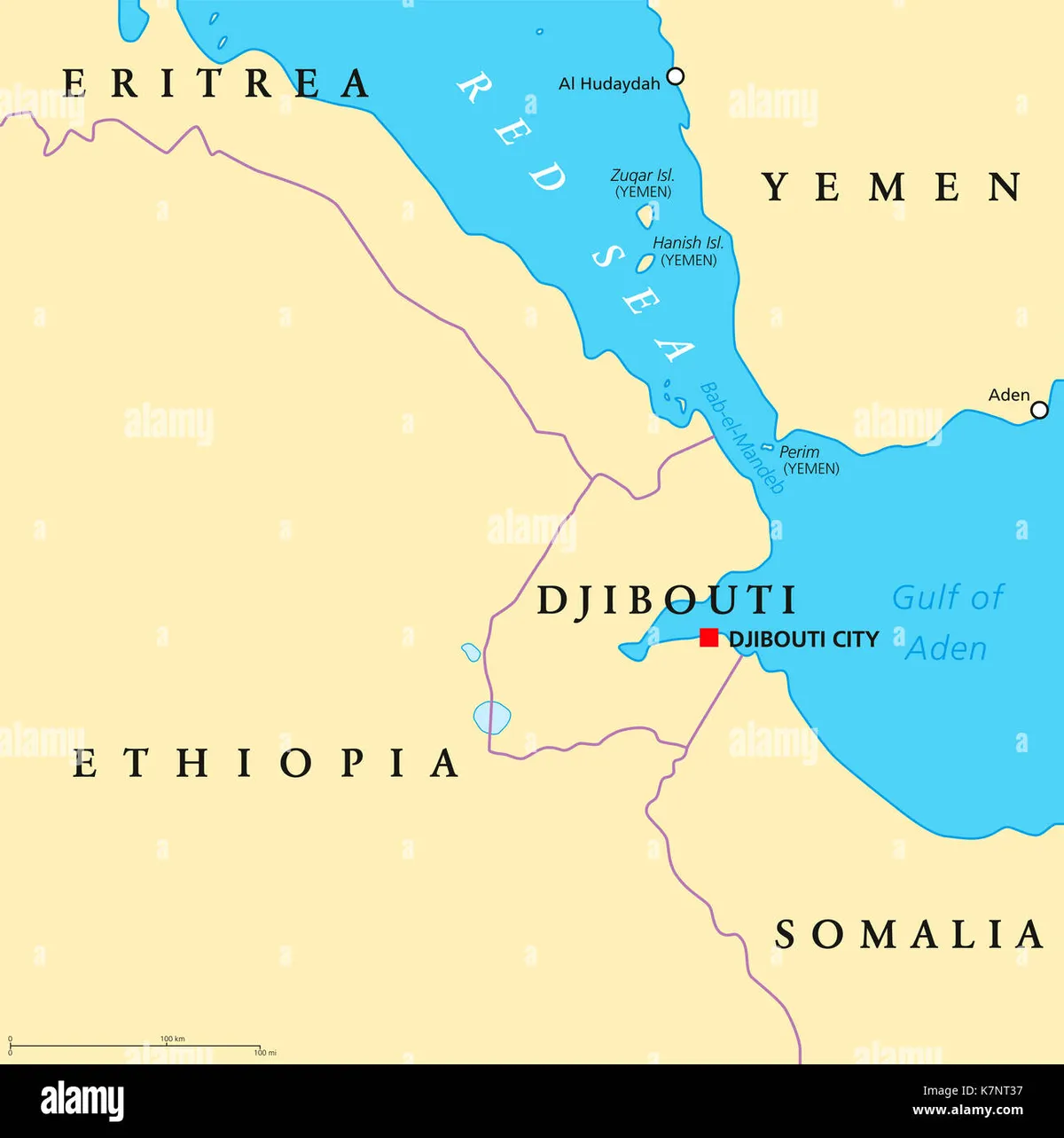
The Bab el Mandeb Strait, a critical maritime passage located between the Horn of Africa and the Arabian Peninsula, raises the question: What are the implications of rising tensions in this strategically vital area? With about 10% to 12% of the world’s maritime trade passing through it, the strait is essential for global commerce.
At its narrowest point, the Bab el Mandeb is just 26 kilometers (16 miles) wide, connecting the Red Sea to the Gulf of Aden and serving as the entrance to the Suez Canal. Approximately 4 to 9 million barrels of oil transit the strait daily, highlighting its importance in the global energy market.
Recent developments have seen Iran threaten to block the strait, a move that could significantly disrupt maritime traffic. The Houthis, a group based in Yemen, have pledged support to Iran in controlling this strategic waterway. This alliance raises concerns about the potential for increased conflict in the region.
In terms of economic impact, cargo worth around $1 trillion passes through the Bab el Mandeb each year. This figure underscores the strait’s role as a linchpin in international trade. The Bab el Mandeb is often referred to as the ‘Gate of Tears’ in Arabic, reflecting its historical significance and the dangers associated with navigating these waters.
The strait’s strategic importance is further emphasized by its comparison to the Strait of Hormuz, which handles about 20% of global energy supplies. The Bab el Mandeb is sometimes dubbed ‘Hormuz 2.0’ due to its critical role in energy transit.
Historically, the Bab el Mandeb gained prominence after the Suez Canal opened in 1869, which increased maritime traffic through the strait. Today, it is considered one of the world’s strategic straits, with a large channel depth of 310 meters and a smaller channel depth of 30 meters.
As tensions escalate, the Islamic Revolutionary Guard Corps (IRGC) has stated, “The Bab al-Mandab Strait is considered one of the world’s strategic straits, and Iran has both the will and the ability to create a completely credible threat against it.” This statement reflects the seriousness of the situation and the potential for conflict.
Details remain unconfirmed regarding the full extent of Iran’s plans and the Houthis’ involvement. The international community is closely monitoring the situation, as any disruption in the Bab el Mandeb could have far-reaching consequences for global trade and energy supplies.