








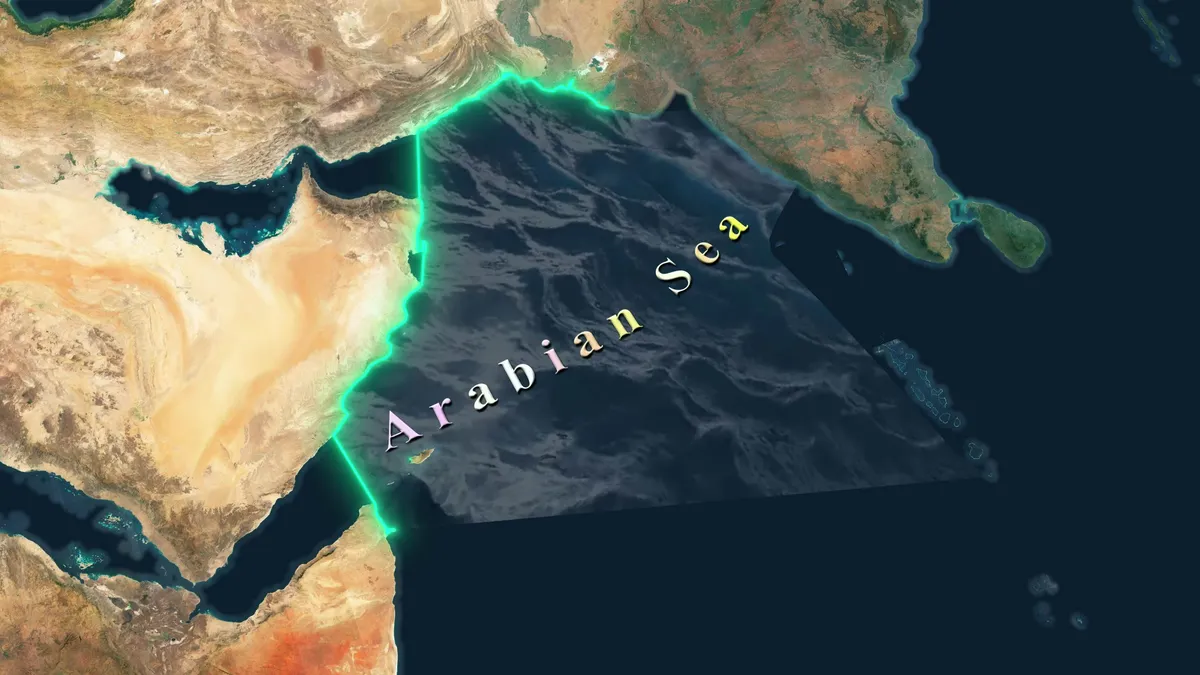
What are the implications of recent events in the Arabian Sea?
The Arabian Sea, a vital maritime hub connecting Asia, Europe, and Africa, is currently facing significant disruptions due to escalating conflicts in the region. This situation raises the question: how will these developments impact global shipping and energy infrastructure?
On March 11, 2026, the Port of Salalah in Oman was struck by drones, igniting two fuel storage tanks and causing substantial damage. Fortunately, no casualties were reported among port workers or local residents. However, the drone strike has raised alarms about the safety of oil infrastructure across the Gulf, prompting shipping companies to reassess their operations in light of the heightened risks.
The International Space Station (ISS) recently captured a striking nighttime image of India while orbiting approximately 400 kilometers above the Earth at a speed of 28,000 kilometers per hour. This image serves as a reminder of the region’s geopolitical significance, especially as the conflict between Iran, the United States, and Israel continues to escalate, affecting maritime trade routes and energy supply chains.
The ongoing tensions have disrupted global oil supplies and increased shipping costs, with transit times reportedly increasing by 10 to 20 days due to the conflict. In response, the India-Middle East-Europe Economic Corridor (IMEC) is expected to play a crucial role in mitigating these challenges, potentially reducing logistical costs for goods shipped from India to Europe by up to 30% and transportation times by 40%.
Experts suggest that the outcome of the current conflict will significantly influence the future trajectory of IMEC. Rafiq Dossani notes, “If Israel and the U.S. win, IMEC will likely be Israel’s preference over the revival of Chabahar,” highlighting the strategic importance of this corridor amidst the ongoing geopolitical tensions.
As the situation unfolds, the implications for global shipping and energy markets remain uncertain. The strike on Salalah has triggered widespread concerns about the safety of oil infrastructure across the Gulf, and details regarding the broader impact of the drone strike on maritime operations have yet to be confirmed.
In summary, the Arabian Sea stands at a crossroads, with its critical role in global logistics and energy supply increasingly jeopardized by regional conflicts. The international community will be closely monitoring developments as they unfold, particularly the potential ramifications for trade and energy security in the coming months.