










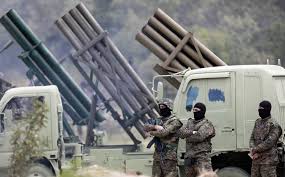
Introduction to Hezbollah
Hezbollah, a Shia Islamist militant group and political party based in Lebanon, has been a key player in Middle Eastern politics since its formation in the early 1980s. Important for both regional and global peace and security, Hezbollah’s influence extends beyond Lebanon through its involvement in various conflicts throughout the region, especially in Syria and Israel.
Background and Formation
Hezbollah was officially formed in 1985 during the Lebanese Civil War, emerging from a need to resist Israeli occupation and challenge Western influences in the region. Backed by Iran, Hezbollah has been involved in numerous violent confrontations, most notably the 2006 Lebanon War against Israel. It has positioned itself as both a militant and political organisation, holding seats in the Lebanese parliament and being involved in various government functions.
Current Involvement in Regional Conflicts
In recent years, Hezbollah has gained significant attention for its involvement in the Syrian Civil War, supporting President Bashar al-Assad’s regime against opposition forces. This support has not only reinforced Hezbollah’s military capabilities but has also solidified its role as a key ally of Iran in the region. The group’s engagements in Syria have sparked criticism and concern from Western nations, as they view Hezbollah as a destabilising force that threatens Israeli security and undermines efforts for peace in the region.
Impact on Global Politics
Hezbollah’s operations have attracted international scrutiny, with several countries, including the United States and members of the European Union, designating it as a terrorist organisation. This classification affects its capacity for international fundraising and complicates diplomatic relations for Lebanon. Analysts express that Hezbollah’s military strength and political influence could further impact the stability of Lebanon and surrounding nations, especially as tensions between Israel and Iran escalate.
Conclusion: The Long-Term Significance of Hezbollah
Hezbollah continues to play a controversial and influential role in Middle Eastern and global politics. Its ability to navigate between national and international challenges indicates that it will likely remain a significant player in future conflicts. For observers of Middle Eastern politics, understanding Hezbollah’s strategies and objectives is vital for comprehending the broader geopolitical landscape, which is fraught with tensions, shifting alliances, and the potential for conflict escalation.