









Introduction
The recent emergence of sinkholes in Bangkok has raised critical alarms regarding urban infrastructure and safety. With cities around the world facing increasing challenges related to climate change, infrastructure decay, and excessive rainfall, the situation in Thailand’s capital serves as a stark reminder of the underlying vulnerabilities in urban planning. The significance of this topic lies not only in its immediate implications for city life but also in broader discussions about sustainable urban development.
Details and Events
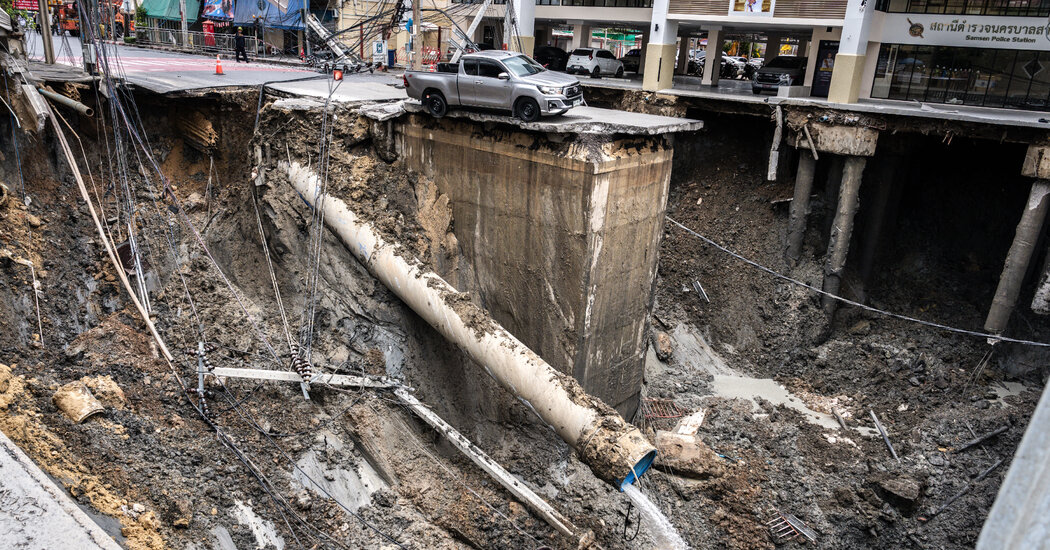
In October 2023, a sinkhole measuring approximately 10 metres in diameter appeared in the heart of Bangkok’s bustling Kaset-Nawamin area, disrupting traffic and causing widespread concern among residents and city officials alike. This incident followed a series of similar occurrences over the past year, with multiple streets in various districts succumbing to unexpected ground collapses. Local reports indicated that the area had experienced heavy rainfall, which may have exacerbated the situation by saturating the soil, leading to structural instability.
City officials from the Bangkok Metropolitan Administration (BMA) have been mobilising to assess and repair damaged infrastructure, while also conducting thorough investigations into the root causes of the sinkholes. Preliminary assessments suggest that inadequate drainage systems, soil erosion, as well as the continuous strain from heavy traffic might be contributing factors. Experts have highlighted that the rapid urbanisation and construction activities in Bangkok have further intensified the stress on the city’s geological makeup.
Conclusions and Future Outlook
The burgeoning issue of sinkholes is symptomatic of larger systemic challenges facing cities like Bangkok. As urban populations grow and climate-related events become more frequent, it is imperative that infrastructure development incorporates resilient design principles. Moving forward, city planners and policymakers are urged to invest in comprehensive drainage solutions and regularly monitor geological conditions to mitigate risks. Furthermore, public awareness and community engagement in urban planning processes can play a crucial role in promoting a culture of preparedness and resilience among residents.
As Bangkok grapples with these vulnerabilities, the rest of the world can observe, learn, and adapt strategies to ensure their own urban landscapes are safeguarded against similar threats. The alarming prevalence of sinkholes serves not only as a wake-up call for immediate action but also as an opportunity for fostering a dialogue about long-term sustainable urban practices.