








Who is involved
The Indian stock market has seen a volatile period since mid-February 2026, primarily influenced by escalating tensions in the U.S.-Israel-Iran conflict, which had a direct impact on oil prices. Prior to the recent developments, market analysts were bracing for continued declines as foreign institutional investors (FIIs) offloaded equities worth ₹8,009.56 crore on March 24, 2026, indicating a lack of confidence in the market’s stability.
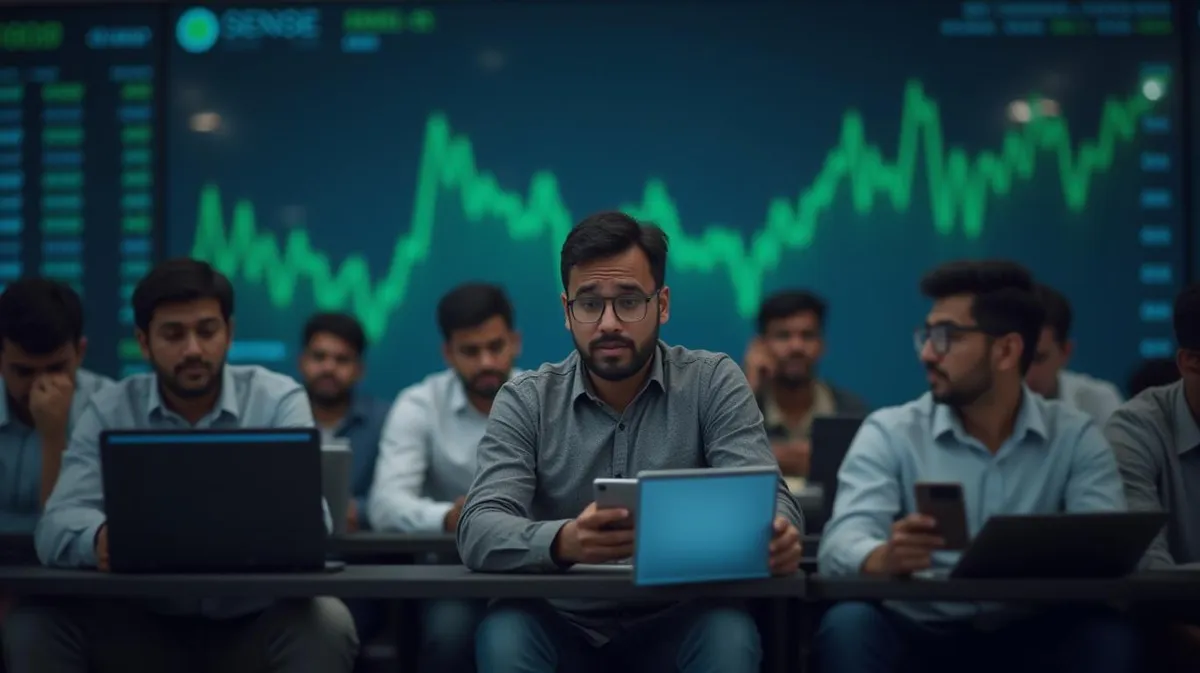
However, a decisive shift occurred on March 25, 2026, when the sensex index jumped over 1,200 points, closing at 75,273.45. This surge was largely attributed to Brent crude prices falling below $100 per barrel, closing at $96. The drop in oil prices alleviated some of the market’s concerns, leading to a robust recovery in investor sentiment.
In addition to the sensex index’s impressive performance, the Nifty 50 also showed significant gains. It opened at 23,064 points and closed at 23,306.45, reflecting a positive shift in market dynamics. The BSE SmallCap Select index further underscored this recovery, jumping 3.05% on the same day, indicating that investor confidence was returning across various sectors.
Domestic institutional investors (DIIs) played a crucial role in this recovery, purchasing stocks worth ₹5,867.15 crore on March 24, 2026. Their activity contrasted sharply with the actions of FIIs, suggesting a divergence in investment strategies and confidence levels among different investor groups. While FIIs were retreating, DIIs appeared to be capitalizing on lower stock prices, indicating a potential shift in market sentiment.
Expert voices in the market have noted that the recovery in Indian equities was supported not only by improving global cues but also by emerging hopes for a potential de-escalation in the ongoing U.S.-Iran conflict. Siddhartha Khemka, a market analyst, remarked, “Indian equities extended their recovery for the second consecutive session, supported by improving global cues and emerging hopes of a potential de-escalation in the ongoing U.S.-Iran conflict.” This perspective highlights the interconnectedness of global events and local market reactions.
All sectoral indices ended higher on March 25, 2026, further reinforcing the notion that the market recovery was broad-based rather than limited to a few sectors. This collective upward movement suggests a renewed optimism among investors, who may have been waiting for a signal to re-enter the market after the recent downturn.
As the market adjusts to these new developments, the focus will likely remain on global oil prices and geopolitical tensions, which continue to play a significant role in shaping investor sentiment. While the immediate outlook appears positive, market participants will be closely monitoring these factors to gauge the sustainability of the recent gains.
Details remain unconfirmed regarding the long-term implications of this market recovery, but the immediate effects are clear: a significant rebound in the sensex index and increased activity from domestic investors, signaling a potential shift in the market landscape.