






Recent Developments in IndiGo’s Share Price
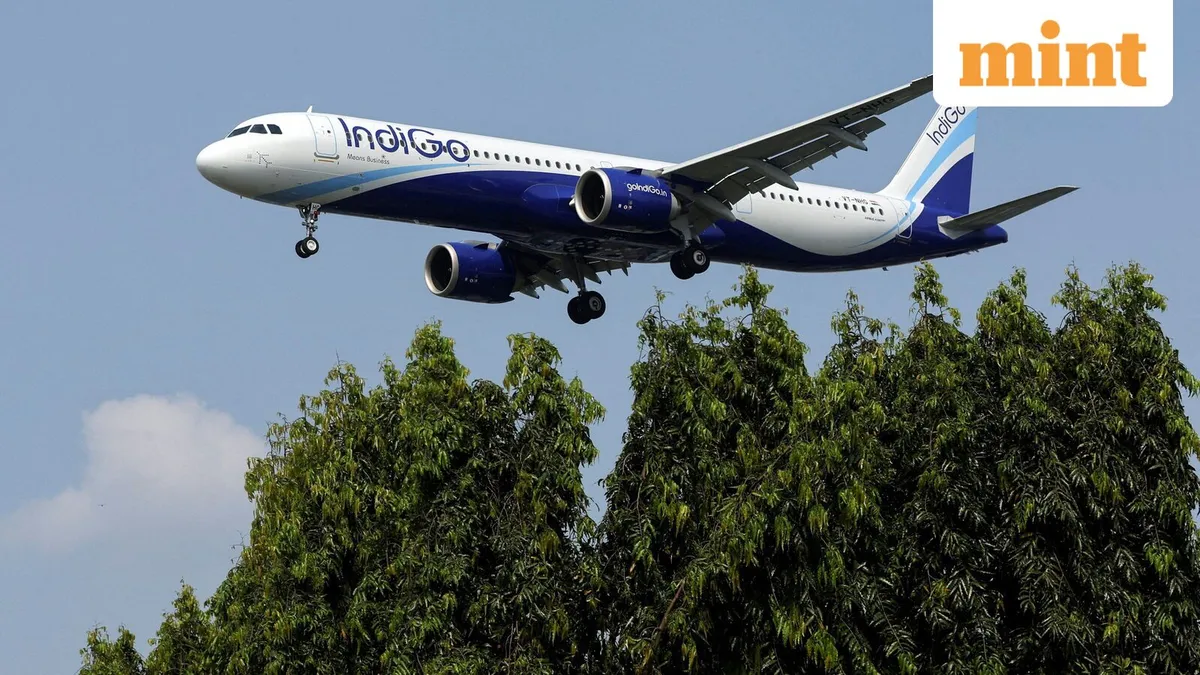
On March 9, 2026, IndiGo’s share price experienced a notable decline, crashing 8% to ₹4,045 apiece. This drop is part of a broader trend, as the airline’s shares have fallen over 11% so far in March 2026. The decline is attributed to a combination of rising crude oil prices and operational disruptions caused by geopolitical tensions in the Middle East.
Impact of Crude Oil Prices
Crude oil prices have surpassed $100 a barrel, reaching a 52-week high, which has significant implications for airlines like IndiGo. Fuel costs account for approximately 40% of total operating costs for airlines, making them particularly sensitive to fluctuations in oil prices. According to JM Financial, “For every USD 5 increase in Brent price, IndiGo’s earnings are expected to contract by ~13% as per our calculation.” This sensitivity to fuel costs has raised concerns among investors regarding the airline’s profitability.
Flight Operations and Geopolitical Tensions
Adding to the challenges faced by IndiGo, the airline has suspended flights to and from the Middle East due to escalating geopolitical tensions. Between February 28, 2026, and March 3, 2026, more than 500 flights to the Middle East and select international destinations were cancelled. IndiGo stated, “In view of the evolving airspace restrictions over Iran and the Middle East, more than 500 flights to the Middle East and select international destinations have been cancelled.” This operational disruption has further contributed to the decline in share price.
Historical Context of IndiGo’s Share Price
IndiGo’s stock has shown significant volatility in recent months. The airline’s share price hit a 52-week high of ₹6,232.50 on August 18, 2025, but has since seen a downward trend, with a decline of around 18% over the past month. On March 9, 2026, the share price also hit a 52-week low of ₹4,035, reflecting the market’s response to the current challenges.
Market Reactions and Future Outlook
Market analysts are closely monitoring the situation, noting that a swift de-escalation in geopolitical tensions could lead to a normalization of operations and bookings. However, as JM Financial warns, “A swift de-escalation would likely see operations and bookings normalize quickly, but a prolonged disruption risks capacity rationalisation, margin compression, and estimate downgrades.” This uncertainty adds to the challenges faced by IndiGo as it navigates these turbulent times.
Operational Performance Metrics
Despite the current challenges, some analysts remain optimistic about IndiGo’s operational performance. Emkay Global noted that IndiGo’s operating metrics for January and February 2026 were broadly in line with or slightly ahead of guidance and estimates. This suggests that while the airline faces external pressures, its internal operations may still be performing adequately.
The decline in IndiGo’s share price is a reflection of the broader challenges facing the airline industry amid rising crude oil prices and geopolitical tensions. As the situation evolves, stakeholders will be watching closely to see how IndiGo adapts to these pressures and what impact they will have on its financial performance moving forward.