










Political Landscape Before the 2026 Election
Before the recent elections in Baden-Württemberg, the political landscape was marked by a general expectation of stability among traditional parties. The Alternative für Deutschland (AfD), classified as a right-wing extremist suspect by the Baden-Württemberg Office for the Protection of the Constitution, had struggled to gain significant traction in the region. In the 2021 elections, the AfD secured only 9.7% of the votes, which was considered a disappointing performance compared to its previous best result of 18.4% in West Germany. This backdrop set the stage for a pivotal moment in the 2026 elections.
Decisive Changes in the 2026 Election
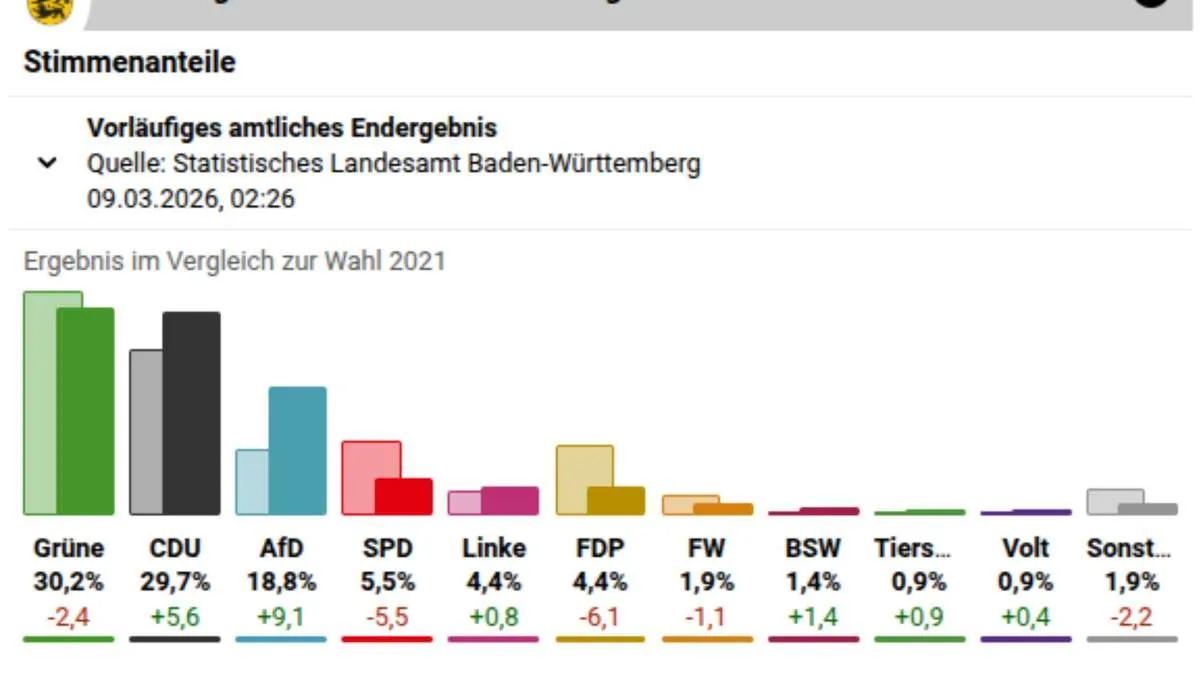
The 2026 Baden-Württemberg election marked a significant shift for the AfD, as the party achieved 18.8% of the votes, reflecting a 9.1% increase from the 2021 results. This surge in support was unexpected and indicated a growing acceptance of the AfD’s platform among voters. However, despite being the party’s candidate for Ministerpräsident, Markus Frohnmaier faced a critical hurdle: he was not on the ballot for the 7.7 million eligible voters, which meant he could not be elected, regardless of the party’s performance.
Immediate Effects on the AfD and Frohnmaier
The immediate aftermath of the election results saw Alice Weidel, a prominent figure in the AfD, expressing satisfaction with the party’s performance, noting that it represented a doubling of their previous results. This newfound momentum positioned the AfD as the likely largest opposition party in the Baden-Württemberg parliament, which could reshape the political dynamics in the region. Frohnmaier, who has been a Bundestag member since 2017 and serves as the deputy chairman and foreign policy spokesperson for the AfD faction, now faces the challenge of leveraging this electoral success while grappling with his own limitations.
Expert Perspectives on the Shift
Political analysts have pointed out that Frohnmaier’s connections to Russia and his controversial background, including accusations of nepotism regarding his wife’s employment, could complicate his role within the party and the broader political context. His statement that the AfD is a “bürgerlich-konservative Partei” (bourgeois-conservative party) reflects an attempt to reframe the party’s image, but it remains to be seen how effective this will be in gaining broader acceptance. Manuel Hagel, a member of the CDU, expressed reluctance to collaborate with the AfD, stating, “Für mich ist kein Amt der Welt so wichtig, dass ich mich mit Stimmen der AfD dort hineinwählen lasse,” highlighting the challenges Frohnmaier faces in building alliances.
Future Implications for Frohnmaier and the AfD
The electoral gains for the AfD, while significant, come with the caveat of Frohnmaier’s inability to ascend to the role of Ministerpräsident. This situation raises questions about the party’s strategy moving forward, especially as Cem Özdemir remarked, “Was die AfD angeht, ist für mich völlig klar: Der Auftrag des Regierens ist, alles dafür zu tun, dass die AfD beim nächsten Mal schwächer ist.” Such statements from opponents indicate a potential for increased resistance against the AfD’s influence in the region.
As Frohnmaier navigates the complexities of his position within the AfD and the broader political landscape of Baden-Württemberg, the party’s recent electoral success presents both opportunities and challenges. The dynamics of collaboration and opposition will play a crucial role in shaping the future of the AfD and its leaders in the coming months. Details remain unconfirmed regarding the long-term implications of these developments.