








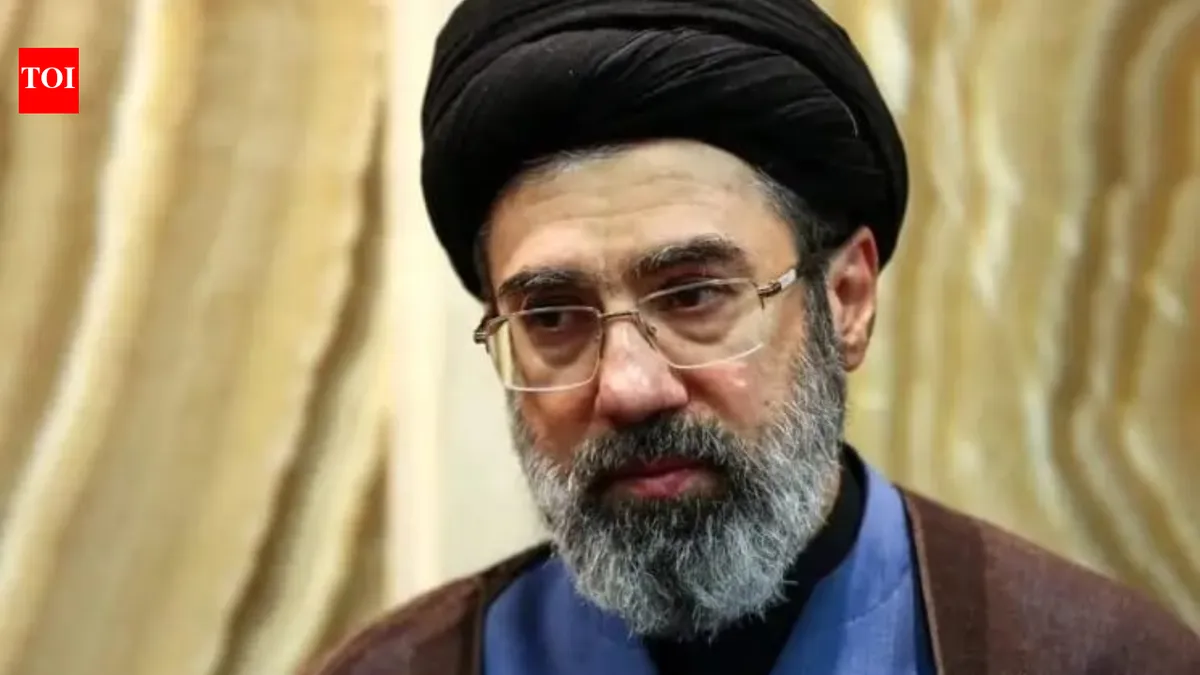
Mojtaba Khamenei: The Next Supreme Leader Of Iran?
Mojtaba Khamenei, the son of the late Supreme Leader Ali Khamenei, has emerged as a significant figure in the wake of his father’s death. The recent killing of Ayatollah Ali Khamenei in a coordinated attack by Israel and the United States has thrown the future of Iran into uncertainty, raising concerns about regional stability.
Reports indicate that Mojtaba Khamenei is being considered as a potential successor to his father. Iranian state media confirmed the 86-year-old leader’s death, with U.S. President Donald Trump suggesting that this event could provide Iranians with a chance to reclaim their country.
The airstrikes that led to Khamenei’s death marked a pivotal moment in U.S. involvement in Iran, representing the second military action against the nation in less than a year. The absence of a clear successor to Khamenei, who had the final say on all major policies, has created a leadership vacuum that could have profound implications for the Islamic Republic.
In response to the crisis, Iran’s Revolutionary Guard has threatened to initiate its most intense military operations against U.S. and Israeli targets.
Who is Mojtaba Khamenei?
Mojtaba Khamenei is an influential Iranian cleric and political figure, recognized as the second-eldest son of the late Supreme Leader Ali Khamenei. Born on September 8, 1969, in Mashhad, Iran, he has been perceived as a powerful member of Iran’s clerical elite, operating largely outside formal governmental roles.
He pursued religious education at the Qom Seminary and established connections within conservative clerical circles, notably with the Islamic Revolutionary Guard Corps (IRGC) and the Basij militia. His brief service in the IRGC during the Iran-Iraq War further solidified his ties to Iran’s political landscape, where he has often acted as a key adviser within the Supreme Leader’s office.
Despite lacking an official government position, Mojtaba’s influence is derived from his control over critical clerical and security networks, his support for hardline political figures, and his involvement in internal security matters, including the suppression of protests following the contentious 2009 elections.
His status as the Supreme Leader’s son has led to speculation regarding his potential succession, particularly after the sidelining or passing of other prominent candidates. However, critics argue that he does not possess the top clerical rank or the broad legitimacy typically expected of a Supreme Leader, and that a dynastic succession could provoke controversy within Iran’s republican framework.
Moreover, investigations have linked Mojtaba to substantial financial networks and assets outside of Iran, highlighting his economic influence that extends beyond the religious and political realms.
The Process of Selecting a Supreme Leader
The Supreme Leader of Iran is appointed through a constitutional process established by the Islamic Republic’s framework.
- Authority: An 88-member clerical body, elected by the public every eight years, is responsible for appointing, supervising, and, if necessary, dismissing the Supreme Leader.
- Immediate Actions After Death: Upon the Supreme Leader’s death or incapacitation, a three-person interim council, comprising the President, the head of the judiciary, and a senior cleric from the Guardian Council, assumes leadership duties until a new leader is appointed.
- Selection of Successor: The Assembly of Experts convenes urgently to evaluate candidates who must be politically and religiously qualified and capable of leadership within Iran’s Islamic system. A majority vote determines the outcome.
- Power Dynamics: While the Assembly formally decides, the IRGC and senior clerics in Qom exert significant informal influence, with political factions negotiating intensely to shape the final decision.
- Types of Successors: Analysts speculate that potential successors could include a hardline cleric aligned with security interests, a politically seasoned figure, or a compromise candidate to ensure stability.
- Timeline: Constitutionally, the process should occur as swiftly as possible, likely taking days to weeks, as Iran has established succession mechanisms since the transition from Ruhollah Khomeini to Ali Khamenei in 1989.
How was Ayatollah Ali Khamenei picked in 1989?
The selection of Ayatollah Ali Khamenei as Supreme Leader in 1989 was completed in a single day following the death of Ruhollah Khomeini. The Assembly of Experts convened urgently to choose a successor, ultimately deciding on Khamenei despite his not meeting the highest clerical rank at the time. His election was supported by influential figures, and a subsequent constitutional referendum removed the marjaʿ requirement, solidifying his position and ensuring political stability during a critical period for the Islamic Republic.
With the recent developments surrounding Mojtaba Khamenei, the future of Iran remains uncertain, and the implications of the succession process will be closely monitored both domestically and internationally.