



Introduction
The Islamic Revolutionary Guard Corps (IRGC) is a vital entity within Iran’s political landscape, influencing both domestic governance and foreign relations since its establishment in 1979. Understanding the IRGC’s role is essential for comprehending the complexities of Iran’s political environment and its strategic ambitions in the Middle East.
The Structure and Function of the IRGC
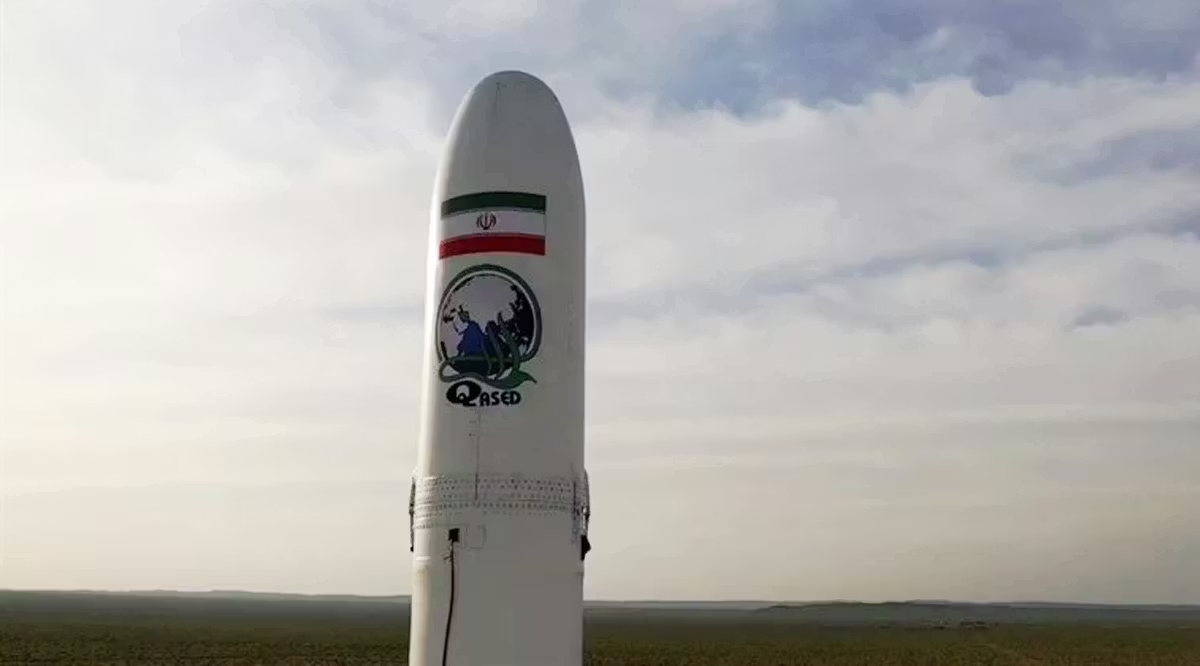
The IRGC was formed after the Islamic Revolution to protect the new regime from both internal and external threats. Apart from its military role, the IRGC has established a vast network of economic, political, and social influence spanning various sectors. It is divided into several branches, including the Ground Forces, Aerospace Force, and Navy, all of which play critical roles in Iran’s national defence. The paramilitary Basij force, which is part of the IRGC, has been crucial in suppressing dissent and maintaining regime stability.
Recent Developments
In recent years, the IRGC has played a central role in Iran’s activities across the Middle East, especially in supporting allied groups in Syria, Iraq, and Lebanon. This involvement has drawn significant international scrutiny, leading to intensified sanctions from the West, particularly the United States, which designated the IRGC as a Foreign Terrorist Organization (FTO) in 2019. This designation acknowledges the Corps’ implications in regional conflicts and its support for militant groups viewed as destabilising forces by many in the international community.
Domestic Impact
Domestically, the IRGC exerts substantial influence over Iranian society and politics. Its involvement in the economy is pervasive, with its enterprises operating in crucial sectors like construction, telecommunications, and oil. This economic clout enables the IRGC to leverage significant political power, often overshadowing the elected government and aligning state policies with its own interests.
Conclusion
The IRGC is not merely a military institution; it is a pivotal component of Iran’s overarching political framework. Its dual role as a protector of the Islamic Republic and a facilitator of regional ambitions poses challenges not only for Iran’s neighbours but also for international stakeholders. As the geopolitical landscape evolves, the IRGC’s influence is likely to remain significant, necessitating careful observation from global leaders aiming to navigate the complexities of Middle Eastern politics and security.