










Introduction
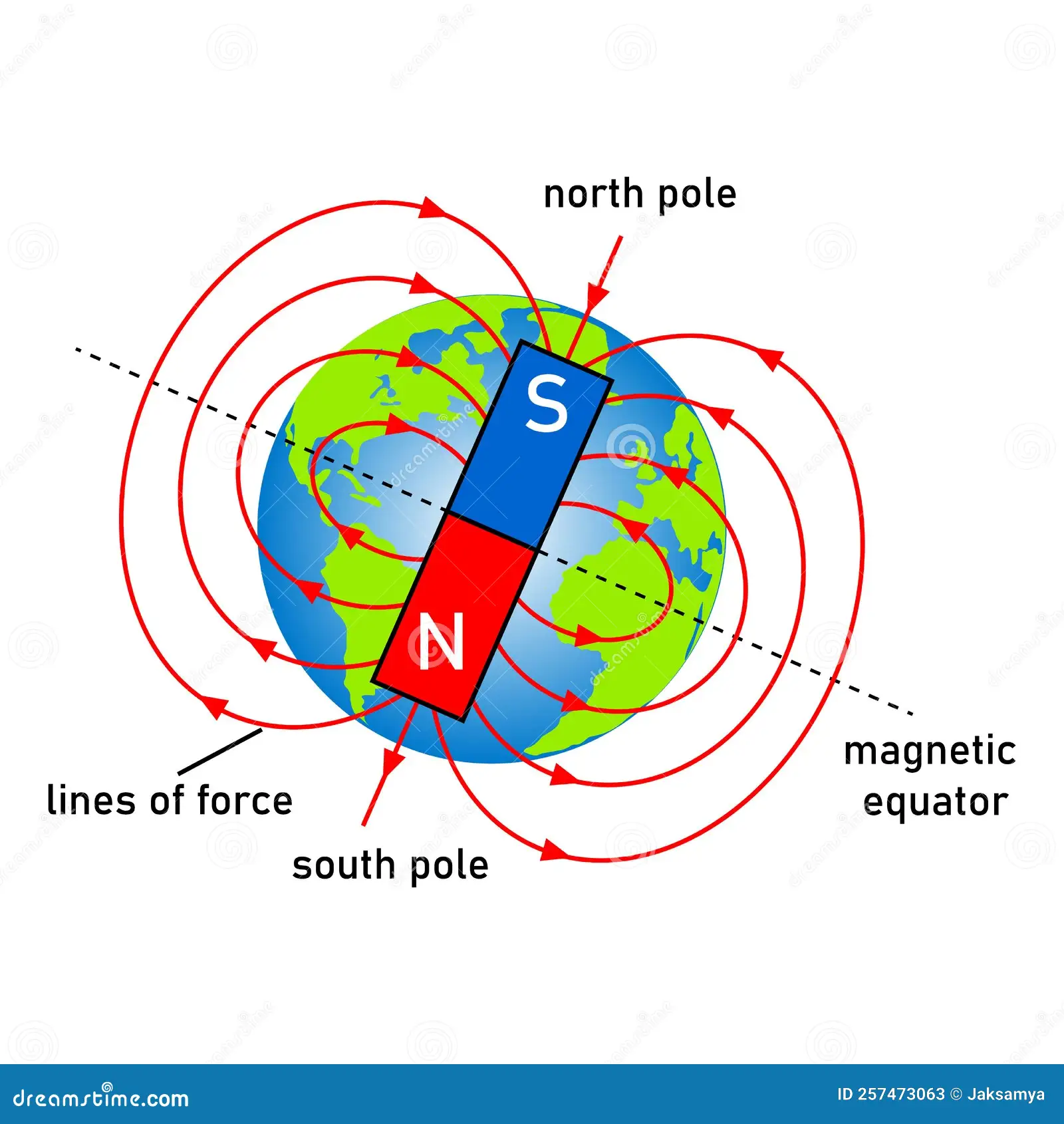
The Magnetic North Pole is a vital reference point for navigation, influencing compass readings and mapping in our increasingly globalised world. Its significance extends beyond navigation, affecting climate research and understanding Earth’s geomagnetic field. Recently, it has caught attention due to its shifting position, a phenomenon with profound implications for various scientific and practical applications.
Current Movements and Tracking Changes
As of 2023, the Magnetic North Pole is observed to be migrating from the Canadian Arctic towards Russia at an unprecedented pace, moving approximately 55 kilometres per year. This shift is primarily influenced by changes deep within the Earth’s core that affect the magnetic field. Scientists monitor this movement closely, particularly as it has practical impacts for navigational systems and technologies, including GPS and aviation.
Implications for Navigation
The drift of the Magnetic North Pole poses challenges for navigators. Traditional compasses, which rely on magnetic orientation, may provide inaccurate readings if adjustments are not made according to the pole’s movement. The International Association of Marine Aids to Navigation and Lighthouse Authorities (IALA) has indicated that mariners must regularly update their charts to ensure safety and accuracy in navigation.
Environmental and Climate Research
The Magnetic North Pole is also significant for climate and environmental studies. Changes in the magnetic field can influence atmospheric conditions and, consequently, climate patterns. Researchers are keen to understand how this shift might correlate with climate change phenomena and other environmental impacts, as it could shed light on the interplay between geomagnetic fluctuations and Earth’s climate systems.
Conclusion
The Magnetic North Pole, while often overlooked, has substantial implications for navigation, technology, and environmental science. As it continues to shift, it is crucial for scientists, mariners, and individuals reliant on compass navigation to stay informed and adapt accordingly. Understanding the dynamics of the Magnetic North Pole may provide further insights into broader geophysical processes and their effects on our planet. Hence, monitoring and studying its movements is not merely a matter of academic interest but a necessity for ensuring accuracy in navigation and advancing our climate science initiatives.