










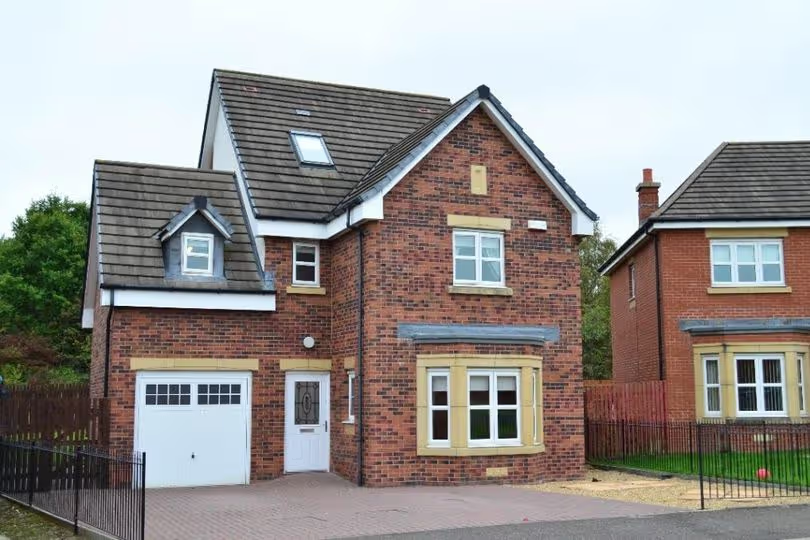
Introduction to the New Driveway Rules
As of October 2023, the United Kingdom has introduced significant new driveway rules aimed at ensuring safer and more environmentally friendly practices for homeowners. These changes reflect a growing emphasis on sustainability and urban planning, seeking to balance the need for private parking with the necessity of maintaining green spaces and reducing flooding.
Details of the New Regulations
The new driveway rules stipulate that any new or replacement driveways that exceed five square meters must be constructed using porous materials. This includes options such as permeable paving stones, gravel, or reinforced grass which allow rainwater to drain through the surface. This regulation is part of broader efforts to mitigate surface water flooding that has become increasingly common due to climate change. Local councils will provide guidance to homeowners on suitable materials and designs to ensure compliance.
Furthermore, homeowners are now required to obtain planning permission for specific types of driveway works, particularly those that impact existing drainage systems. Factors such as the proximity to public streets and residential areas are considered when granting this permission. Homeowners can refer to local planning authorities for detailed guidelines and support.
Implications for Homeowners and Builders
The implications of these new driveway rules stretch beyond environmental concerns. Homeowners are encouraged to carefully assess their existing driveways to ensure compliance, which could involve costly retrofitting or redesigns. Builders and contractors will also need to adapt their practices to align with the new regulations, potentially impacting project timelines and costs. Awareness and education on these changes will be vital for both parties to avoid penalties and ensure smooth operations.
Conclusion and Future Outlook
The introduction of new driveway rules signifies a pivotal shift in the UK’s approach to urban development and environmental conservation. As homeowners integrate these regulations into their plans, it is anticipated that there will be a gradual transition towards more eco-friendly practices in residential properties. While initial challenges may arise, these changes can lead to better-managed drainage systems and more sustainable urban spaces in the long run. Homeowners are urged to stay informed about the evolving regulations and be proactive in adapting their properties accordingly.