Introduction
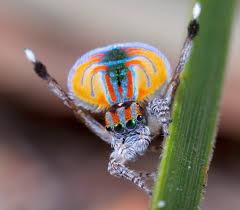
The peacock spider, belonging to the genus Maratus, has captured the fascination of researchers and enthusiasts alike due to its vibrant colours and intricate courtship displays. This tiny arachnid, native to Australia, showcases an extraordinary display of sexual selection, which has made it a popular subject for scientific study and nature documentaries.
Physical Characteristics
Peacock spiders are small, measuring only about 5mm in length. Their most distinctive feature is the brightly coloured flaps on their abdomen, which can display a palette of iridescent colours ranging from blue and green to red and orange. These flaps function as a visual signalling mechanism during courtship, where males perform complex mating dances to attract females. The intricate movements, combined with the vibrant colours, create a nearly hypnotic spectacle.
Behaviour and Mating Rituals
During mating season, male peacock spiders engage in elaborate courtship displays to woo female partners. They perform a series of intricate movements, including leg waving and dorsal flap extensions, accompanied by rhythmic vibrations to capture the attention of potential mates. Researchers have documented these courtship sequences, revealing that males not only rely on visual cues but also on subtle vibrational signals to communicate their intentions.
Current Research and Conservation
Recent studies have highlighted the importance of peacock spiders in understanding evolution and sexual selection. Their unique mating behaviours provide insight into how physical traits can influence reproductive success. Additionally, with over 50 identified species of peacock spiders, there is a growing concern about habitat loss and environmental changes affecting their populations. Conservation efforts are crucial to ensure that these fascinating arachnids continue to thrive in their natural habitats.
Conclusion
The peacock spider stands out not only for its stunning beauty but also for its significant role in the study of sexual selection and evolution. As researchers continue to explore the complexities of their behaviour and ecology, it is essential for conservation measures to be implemented to protect these remarkable creatures. Their survival is not just a matter of preserving a species but also about maintaining the ecological balance in their habitats. The vibrant world of the peacock spider serves as a reminder of the incredible diversity of life that exists on our planet.