Introduction
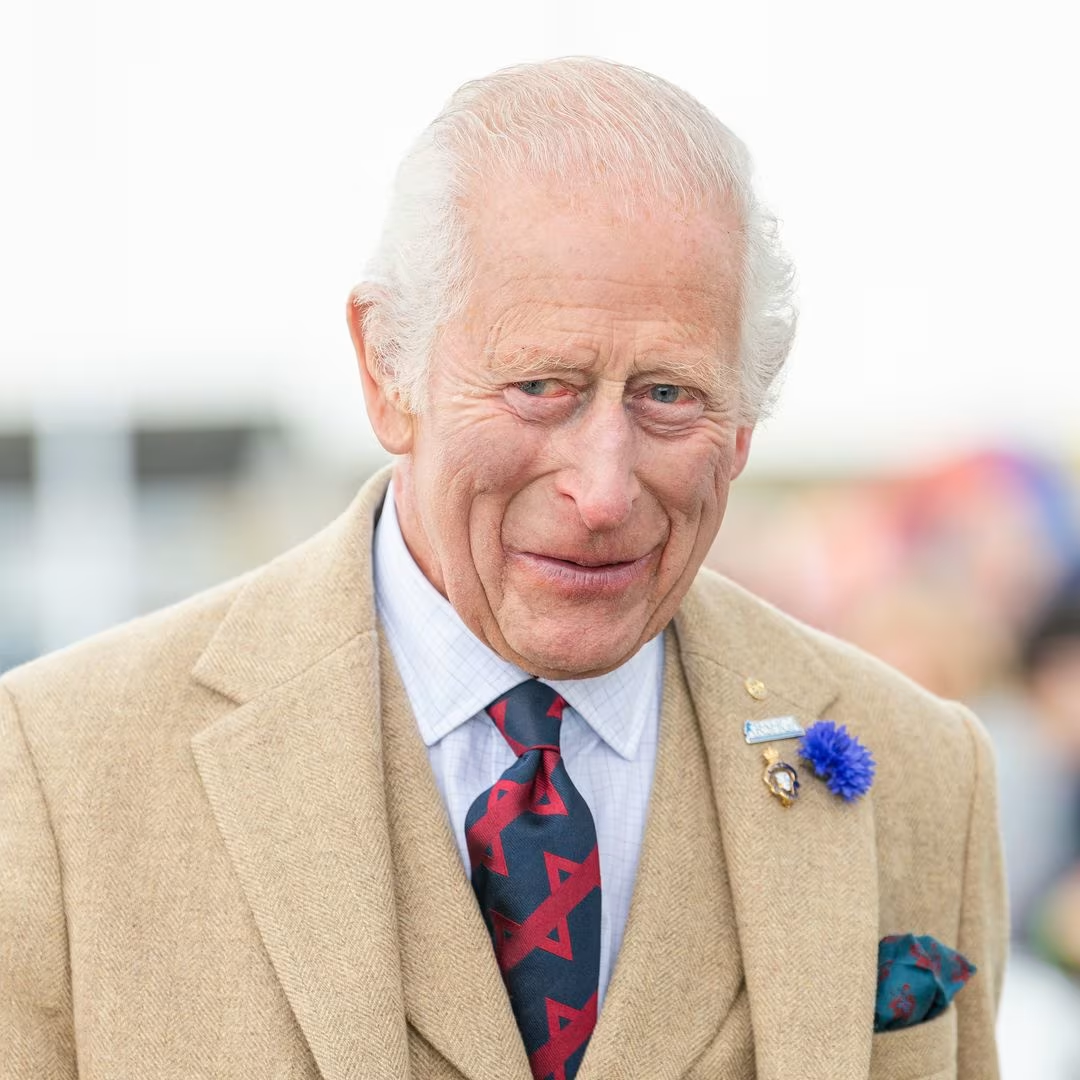
Following the passing of Queen Elizabeth II in September 2022, King Charles III has ascended to the throne, marking a significant transition for the British monarchy. His reign comes at a pivotal moment for the United Kingdom and the Commonwealth, with various social, political, and environmental challenges ahead. Understanding King Charles’s role is crucial, as it influences the future of the monarchy and its relationship with the public.
King Charles’s Ascension
King Charles III was formally proclaimed king in a poignant ceremony at St James’s Palace, following a long-standing wait since the death of his mother. His ascension is accompanied by a desire to modernise the monarchy, focusing on inclusivity and environmental sustainability. Charles has always been an advocate for ecological issues and aims to incorporate his passions into his reign.
Public Engagement and Modernisation
One of the most notable aspects of King Charles’s reign is his approach to public engagement. Early in his reign, he has expressed his intent to visit various communities across the UK to understand their needs better. Additionally, he has begun to engage with younger generations through social media platforms, attempting to bridge the gap between the monarchy and modern society. This approach not only aims to retain the monarchy’s relevance but also strives to create a connection with citizens who may have felt distanced from traditional royal structures.
Challenges Ahead
Despite the positive outlook, King Charles faces considerable challenges. Issues such as economic instability, the ongoing repercussions of Brexit, climate change, and public perception of the monarchy itself will test his leadership. Recent polls indicate mixed feelings towards the monarchy’s future, with many wondering about its role in contemporary society. As he establishes his reign, King Charles is keenly aware of the need to ensure the monarchy is perceived as adaptable and in touch with modern values.
Conclusion
In conclusion, King Charles III stands at a crossroads that could redefine the British monarchy for generations to come. His commitment to modernisation, public engagement, and environmental issues highlights his vision for a more dynamic institution. As challenges loom, the significance of his reign will ultimately depend on his ability to connect with the public and navigate the complex landscape of modern Britain. For citizens and observers alike, the next few years promise to be a critical period in the monarchy’s evolving narrative.