






Introduction: The Importance of Traffic
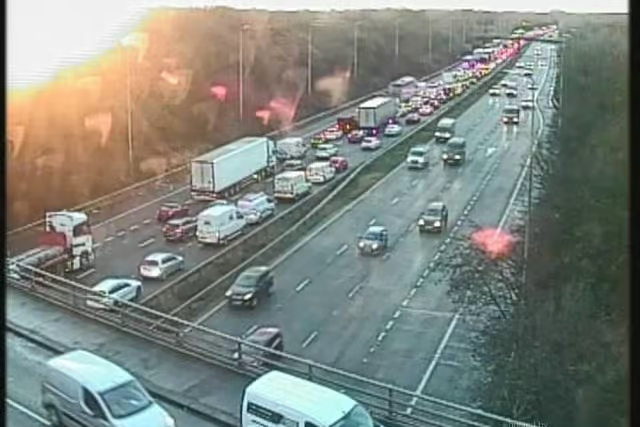
Traffic congestion is a pressing issue in many urban areas, affecting millions of commuters daily. The growing population in cities has led to an increase in vehicles on the road, resulting in longer travel times and numerous challenges related to infrastructure and the environment. Addressing traffic congestion is crucial for improving urban mobility, ensuring safety, and enhancing the overall quality of life.
The Current State of Traffic Congestion
Recent reports indicate that cities around the world are experiencing record levels of traffic congestion. According to the INRIX 2022 Global Traffic Scorecard, Los Angeles emerged as the most congested city in the United States, with drivers wasting 102 hours annually due to traffic jams. Similarly, cities like London and Sao Paulo also ranked high on the list, revealing a widespread issue that plagues urban residents.
Several factors contribute to this congestion, including a lack of public transport options, road maintenance issues, and an overstretched infrastructure that has not kept up with urban growth. Amid the COVID-19 pandemic, while some cities observed a temporary decline in traffic due to remote work measures, traffic levels have rebounded even higher as people return to offices.
Environmental and Economic Implications
The implications of traffic congestion extend beyond mere inconvenience. Increased vehicle idling and stop-and-go traffic contribute to higher emissions, negatively impacting air quality and public health. A study from the American Society of Civil Engineers estimates that congested roads contribute to an additional 3 billion gallons of fuel consumption each year in the United States, costing the economy around $87 billion in lost productivity and unnecessary fuel expenses.
Solutions on the Horizon
Governments and city planners are increasingly exploring innovative solutions to mitigate traffic congestion. Initiatives such as expanding public transportation systems, promoting ride-sharing, implementing congestion pricing, and developing smart traffic management systems are being adopted in various cities to alleviate traffic woes. For instance, London’s ULEZ (Ultra Low Emission Zone) aims to reduce traffic levels and improve air quality by charging fees for older, more polluting vehicles.
Conclusion: The Future of Urban Mobility
The ongoing challenges posed by traffic congestion necessitate a coordinated response from governments, businesses, and individuals. With the rise of technology and sustainable options, there is potential for significant improvements in urban mobility. As cities continue to evolve, embracing a multi-faceted approach to tackle traffic congestion will be essential for ensuring safe, efficient, and environmentally friendly transportation systems for future generations.