









Introduction to the Greenland Map
Understanding the geographical layout of Greenland is crucial for scholars, travellers, and those interested in climate research. Greenland, the world’s largest island, holds immense importance due to its unique environmental conditions and cultural heritage. A detailed map provides insight into its vast ice sheets, extensive coastline, and the indigenous communities that inhabit this remote region.
Geography of Greenland
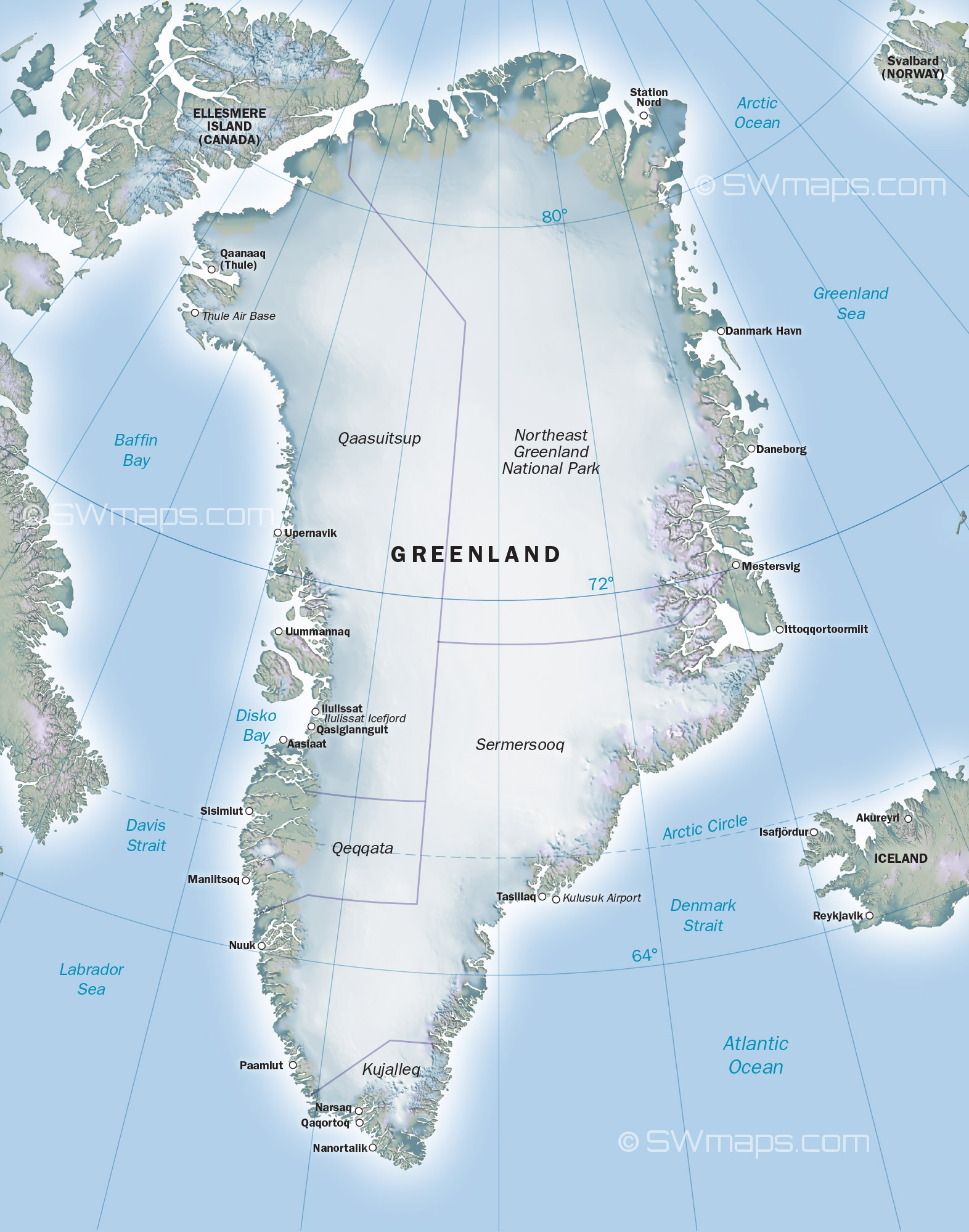
A comprehensive map of Greenland reveals the island’s extensive landscape, which is predominantly covered by an ice sheet that holds about 10% of the world’s freshwater. This ice cap is critical for global sea-level rise research as climate change accelerates melting in this region. The eastern and western coastlines are fragmented by numerous fjords and steep cliffs, making for dramatic scenery and a complex geography that is crucial for navigation.
Regions and Administrative Divisions
Greenland is divided into various regions, each with its geographical and cultural distinctiveness. Major areas include:
1. **South Greenland**: Known for its agriculture and the first Norse settlements.
2. **East Greenland**: Home to stunning, remote landscapes and small, scattered communities.
3. **North Greenland**: A sparsely populated area that includes the northernmost settlements in the world.
4. **Central Greenland**: Dominated by the ice sheet, playing a pivotal role in scientific studies.
Recent Developments and Significance
The mapping of Greenland has evolved with technological advancements in satellite imagery and geographic information systems (GIS). Recent studies have shown concerning trends related to climate change, particularly regarding the melting ice and its implications on global weather patterns. As Greenland becomes a focus of scientific research, the importance of accurate mapping becomes even more critical for disaster preparedness and environmental studies.
Conclusion and Future Outlook
The Greenland map not only showcases its geographical features but also serves as a reminder of the climate challenges the world faces today. Understanding this formidable landscape is essential for environmental scientists, policymakers, and global communities. As research continues, the need for detailed and updated maps will grow, providing a vital tool for project planning, conservation efforts, and educational purposes. The coming years may see increased scientific expeditions aimed at understanding and preserving the unique environment of Greenland, making access to accurate maps more important than ever.