










Introduction
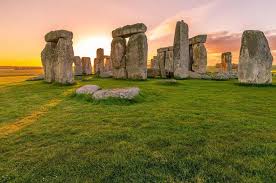
Stonehenge, the iconic stone circle located in Wiltshire, England, has captivated historians, archaeologists, and tourists alike for centuries. Recognised as a UNESCO World Heritage Site, it stands as a testament to prehistoric engineering and spirituality. Its significance extends beyond mere tourism; Stonehenge offers insights into Neolithic life, ceremonial practices, and ancient astronomical understanding.
Recent Discoveries and Importance
Recent archaeological efforts around Stonehenge have provided new understanding regarding its construction and purpose. Excavations have uncovered various artifacts, including tools and pottery, that suggest a vibrant community lived and worked in the vicinity. A study published in *Nature* highlighted a series of burial mounds and additional standing stones, hinting at a complex network of rituals that once thrived in the area.
It was also discovered that the alignment of the stones corresponds to astronomical events, particularly the summer and winter solstices. This has led to theories that Stonehenge served as a prehistoric observatory, enabling ancient people to track seasonal changes important for agriculture and social organization.
Current Interest in Stonehenge
The site continues to attract attention for both scholarly research and public interest. In July 2023, a team of researchers launched a project aimed at using ground-penetrating radar to scan for hidden structures beneath the earth, potentially unveiling more about this ancient monument. The project aims to identity how the landscape surrounding Stonehenge interacted with river movements and agriculture.
Conclusion
Stonehenge remains one of the most significant archaeological sites in the world. Its mysteries are slowly being uncovered through modern science, which not only enrich our understanding of its history but also highlight its role in early human society. With ongoing research and public engagement, the story of Stonehenge continues to evolve, reminding us of our deep-rooted connection to ancient cultures and their monumental achievements.