







Introduction
Minsk, the capital of Belarus, has long been a city of strategic importance in Europe. With its rich history, resilient spirit, and vibrant culture, Minsk serves not only as the political and economic hub of Belarus but also as a crucial link between Eastern and Western Europe. In recent times, the city has seen a rise in international attention due to its evolving political landscape and cultural developments. This article will delve into the significance of Minsk, recent events, and its implications for both local residents and international observers.
Recent Developments in Minsk
In 2020, Belarus witnessed significant political upheaval following a controversial presidential election. Protests erupted in Minsk and across the country, challenging the long-standing rule of President Alexander Lukashenko. The government’s response to these protests attracted widespread condemnation from international communities and led to sanctions from the EU and the US. Despite the challenges, Minsk remains a city where resilient activism flourishes amidst repression. Activists and ordinary citizens have organised peaceful assemblies and have been vocal about their aspirations for democracy and reform.
Cultural Renaissance
Beyond the political scene, Minsk is also experiencing a cultural renaissance. The city is home to a burgeoning art scene, with numerous galleries, street art, and music festivals showcasing local talent. The annual Minsk International Film Festival, for instance, draws filmmakers and cinema lovers from across the globe, turning the city into a hub for creativity and innovation. Additionally, initiatives such as the ‘Minsk Design Week’ highlight the city’s potential as a centre for design and architecture, fostering collaboration among local artists and international peers.
Urban Development
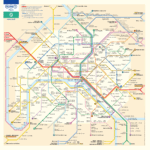
Modernisation efforts in Minsk are ongoing, with significant investments in urban infrastructure. Projects like the reconstruction of public spaces, expansion of the metro, and the development of smart city initiatives aim to enhance the quality of life for residents. These developments not only improve urban living but also attract business investments, positioning Minsk as an appealing destination for foreign companies looking to establish a foothold in Eastern Europe.
Conclusion
Minsk stands at a crossroads, where complex political struggles intersect with vibrant cultural growth and urban development. The continued desire for change amongst its citizens, coupled with international interest, suggests that Minsk will remain a focal point in Eastern Europe. As the city evolves, it will be essential for global observers to keep an eye on how these dynamics shape not only Belarus’s future but also the broader regional context. Ultimately, Minsk’s journey reflects the challenges and aspirations of a society navigating its path towards democracy and modernity.