









Introduction
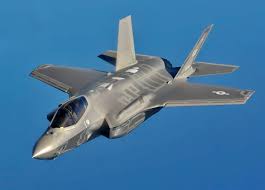
The F-35 Lightning II, developed by Lockheed Martin, represents a significant leap in military aviation technology. Designed to be a multi-role stealth fighter, the F-35 is crucial for modern defence strategies, addressing the evolving needs of air power in combat scenarios. As nations worldwide enhance their military capabilities, understanding the F-35’s features and significance becomes increasingly vital.
Key Features of the F-35
The F-35 comes in three variants – the F-35A (conventional takeoff and landing), the F-35B (short takeoff and vertical landing), and the F-35C (carrier-based). This versatility allows it to serve in diverse environments, from land bases to aircraft carriers. Key features include advanced stealth technology, which allows it to evade radar detection, and state-of-the-art sensors that provide superior situational awareness. The F-35 is equipped with a powerful avionics suite, enabling data-sharing and coordinated attacks across allied forces.
Current Developments and Deployments
As of 2023, the F-35 programme has seen international interest, with over 1,700 units delivered to allied nations including the United States, the United Kingdom, Israel, and several NATO countries. Recently, the aircraft has been showcased in military exercises across Europe and the Indo-Pacific region, proving its operational capabilities in joint-force scenarios. Notably, an F-35 from the UK’s Royal Air Force demonstrated its advanced capabilities in an air combat training exercise alongside other NATO aircraft. Furthermore, ongoing discussions regarding further integrations of artificial intelligence in F-35 systems highlight the future potential of this fighter jet.
International Implications
The F-35 programme also entails geopolitical considerations. The global distribution of F-35s has implications for military balance, especially in regions with rising tensions. For instance, the sale of F-35s to allies may act as a deterrent against adversarial threats, but it can also lead to tensions with countries opposing NATO expansion. This duality underscores the importance of strategic partnerships and technology-sharing agreements within military alliances.
Conclusion
The F-35 Lightning II is more than just a fighter jet; it signifies a shift in how air superiority is achieved. While it enhances the tactical capabilities of allied forces, it also plays a pivotal role in shaping international relations and defence policies. As we move forward, the continuing evolution of the F-35 will undoubtedly influence military strategies and air combat operations across the globe, making it a topic of essential relevance for military analysts and policymakers alike.