Introduction to the Butterfly Shaped Hole
The phenomenon of solar holes, or coronal holes, is significant in understanding solar activity and its effects on space weather. A notable observation that has caught scientists’ attention recently is the appearance of a butterfly shaped hole on the Sun. This unusual pattern, which has sparked both curiosity and concern among researchers, showcases the dynamic nature of our star and has implications for satellite communications and power systems on Earth.
Details and Observations
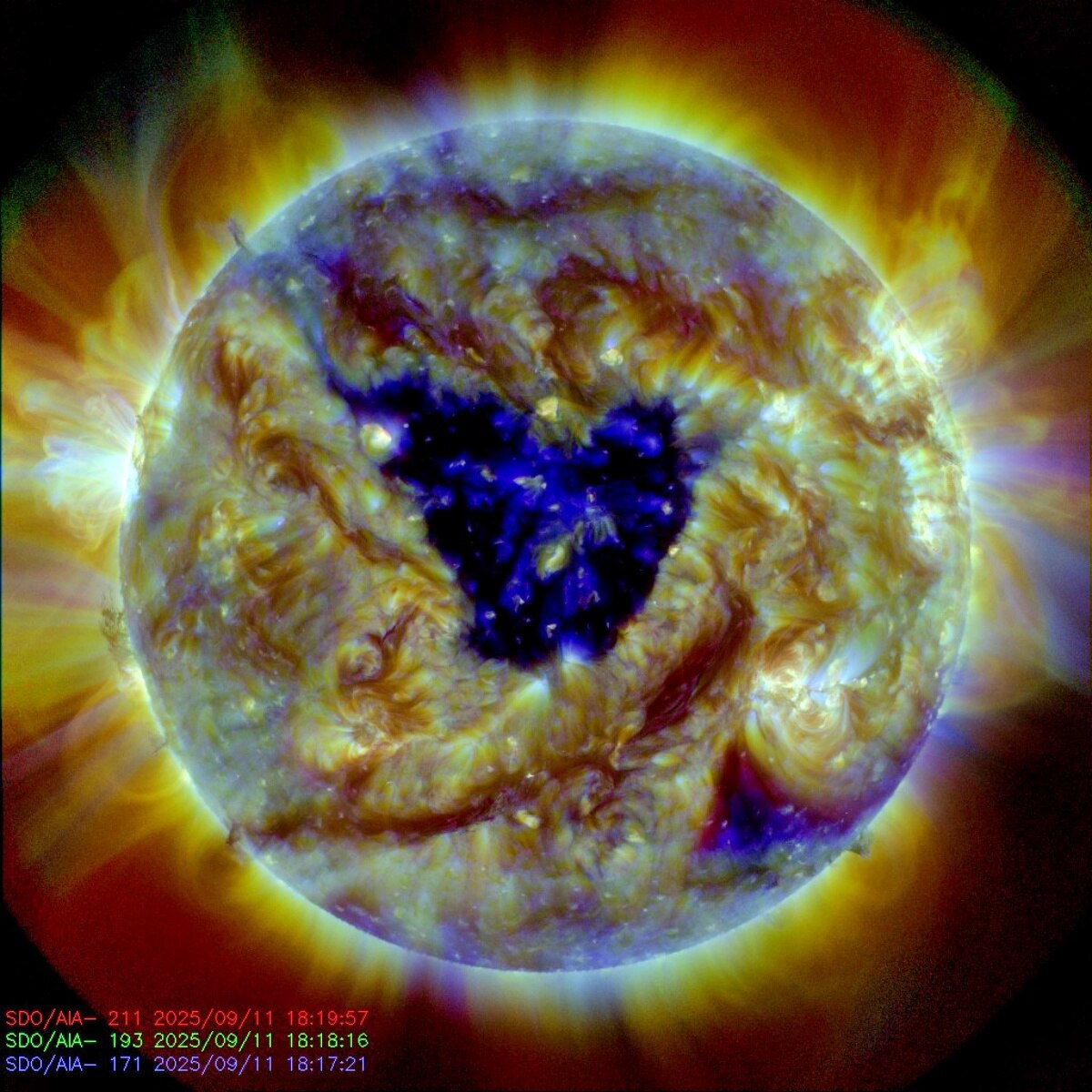
In recent images captured by NASA’s Solar Dynamics Observatory (SDO), the butterfly shaped hole has emerged as a distinct feature in the Sun’s atmosphere. Coronal holes represent regions where the solar magnetic field opens up, allowing solar wind – a stream of charged particles – to escape into space. The latest observations depict this hole taking on an intriguing shape resembling a butterfly, raising the interest of solar physicists worldwide.
This butterfly shaped hole has generated discussions within the scientific community, as coronal holes are often precursors to solar storms. When the solar wind escapes through these openings, it can interact with Earth’s magnetosphere, potentially leading to geomagnetic storms that might disrupt satellite operations and power grids. Scientists are currently monitoring the activity surrounding this hole to assess its potential impact on Earth.
The Significance of Solar Research
Understanding coronal holes and their characteristics is vital for predicting solar activities that may affect modern technology. The butterfly shaped hole serves as a reminder of the Sun’s unpredictability and the importance of continuous observation. The data collected from these solar events will contribute to broader research efforts aiming at safeguarding technology that relies on satellite operations, such as GPS and communications systems.
Conclusion and Future Implications
As researchers continue to study the butterfly shaped hole on the Sun, they hope to unlock further secrets about solar dynamics and its implications for Earth. This particular observation not only highlights the ongoing mystery of our solar system but also emphasizes the need for preparedness in the face of potential solar storms. As technology grows increasingly reliant on solar behavior, the implications of such findings will become even more significant for guiding safety protocols in the field of space weather.