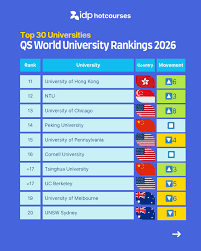
Introduction
The landscape of higher education continuously evolves, with university rankings serving as a critical indicator of academic prestige and the quality of education provided by institutions worldwide. As we approach 2026, the importance of these rankings is more significant than ever, influencing student choices, university funding, and global perceptions of educational quality.
Current Trends in University Rankings
Several organisations, such as QS World University Rankings, Times Higher Education, and Academic Ranking of World Universities (ARWU), annually compile their rankings based on various criteria, including academic reputation, faculty/student ratio, citations per faculty, and international outlook.
The 2026 rankings are expected to reflect an increasing emphasis on research output and societal impact, particularly in light of the ongoing global challenges like climate change, public health crises, and social inequality. Institutions that engage meaningfully with these issues are likely to see enhanced visibility in the rankings.
Key Universities Leading the Rankings
While it is still early to predict exact rankings for 2026, many institutions have consistently secured top positions in recent years. Universities such as the University of Oxford, Stanford University, and Massachusetts Institute of Technology (MIT) remain frontrunners with their renowned research programmes and strong academic reputations.
Moreover, universities in emerging educational hubs such as Singapore and China, including the National University of Singapore and Tsinghua University, are climbing the ranks due to their substantial investments in research and development. This shift indicates a diversification of academic excellence beyond traditional Western institutions.
The Impact of Rankings on Educational Choices
Rankings significantly influence prospective students’ decisions when selecting universities. The desire to attend a highly-ranked institution can dictate application choices and investment in education. Additionally, universities often use their ranking status in marketing, leading to increased applications and funding opportunities.
Conclusion
As we gear up for 2026, the significance of university rankings continues to grow, shaping the future of higher education globally. Institutions that adapt to changing educational demands and strive for excellence in research and societal contributions are likely to benefit in the long term. Understanding these dynamics will be crucial for students, educators, and policymakers. The forthcoming university rankings will not only reflect the academic landscape but also indicate which institutions are best positioned to address pressing global issues.